Civil Rights 2.0 A Conversation with DeRay Mckesson
- 0.5
- 1
- 1.25
- 1.5
- 1.75
- 2
Michael Rivo: Welcome back to Blazing Trails. I'm Michael Rivo from Salesforce Studios. I'm here with Rachel Levin. We're the team that brings you Blazing Trails. Hello Rachel.
Rachel Levine: Hey Michael, how you doing?
Michael Rivo: Doing great. I'm super excited for this episode today. Rachel, tell me what we're going to be hearing.
Rachel Levine: Well today, we're going to hear another great conversation from our BOLDforce series. And for our listeners that don't know, BOLDforce stands for Black Organization for Leadership and Development. And the goal of it is really to expand and empower the Salesforce black community. Today there's a really great conversation that we're going to be hearing from DeRay Mckesson. He's a civil rights activist, and many people may recognize him as one of the early supporters of the Black Lives Matter movement. He sat down with Lola Banjo, who's also the president of BOLDforce at Salesforce and a senior managing director. And they talked about why he became an activist and what it really takes to bring about lasting change.
Michael Rivo: Yeah, this episode is really inspiring and we are excited to bring you this conversation. So let's take a listen to activist DeRay Mckesson, and Lola Banjo.
Lola Banjo: Welcome everyone to this very special event sponsored by our friends at KPMG. Thank you to the Salesforce office of equality and BOLDforce for bringing this together. I am so honored to be here today with DeRay Mckesson. Thank you so much DeRay for joining us today and helping us kick off Black History Month at Salesforce.
DeRay Mckesson: It's an honor to be here. I'm excited for this conversation. I'm a big fan.
Lola Banjo: I'm excited too. Okay. So, DeRay, for those that are tuned in today who are new to your work and also may have missed your keynote during our annual Racial Equality Summit, Representation Matters, can you tell us a little bit about your background and how you got started in activism and fighting for systemic change?
DeRay Mckesson: As an organizer, when I was a young person, then I went to college, I was a teacher. I taught sixth grade math, which was incredible. And then I was in Minneapolis in 2014, and I was leading a part of the school system, and I saw on the news that a kid got killed in St. Louis. I was like, you know what? I'm going to go for the weekend and just stand in solidarity, be in solidarity with people because Mike Brown got killed. The second I was in St. Louis was the first night that I got tear gas and that changed my life. That really was a defining moment for me. From that moment on, I've been working on issues of police violence. I was one of the original protesters of Ferguson. I've been in almost all the cities in protests, and I've worked to try and figure out what we do from a solution standpoint. That's the work I do now.
Lola Banjo: Amazing. Thank you so much for all your work. Since you last joined us, so much has happened in the world. I mean, we've heard all about it. Not only are we facing a global pandemic that we know is disproportionately affecting our community, we also saw palliative and racial injustice rise to the forefront this summer with the killing of George Floyd, Breonna Taylor, Ahmaud Arbery. As someone who's been at those lines with the work that you're doing, and for nearly a decade now, what were your thoughts when you were seeing that?
DeRay Mckesson: It was one of those things that I never thought... Living through the first set of protests and being a part of it, I was like, wow, this is unreal. I never thought I'd live through two of them so soon. I'm like," [inaudible 00:03:09] I feel like this is back when we were." I think that in some ways seeing is believing. I think that people saw it and there are people who were on the fence, there are people who didn't stand with us in 2014 and this was their moment. They were like," If it ever happens again, I got you." So I think that more people understood the problem and I think that's real. When we look at this, what we see is that the police actually killed more people in 2020 than almost every year of data we have. 2020 was second only to 2018. The number of people killed did not go down despite the protest, COVID, quarantine, lockdown, all that stuff. The number of people that were killed by the police actually went up, which is sort of wild. So when I step back, I'm like, we've got a lot of work to do. But you look at all the media coverage, the magazine, the conversations, people really do think that that led to some structural change and it necessarily didn't. Now that doesn't mean that all the energy was not important, but it does mean that we actually have to look and make sure that we are focusing on what the problem is. And the other thing that we know now that we didn't know five years ago, six years ago, is that the police actually kill more people in suburban communities than almost all other communities combined. It's not cities. People think it's cities. Cities is actually the only place that it's getting better, and rural communities and suburban communities is getting worse. So when I think about this last year, it was a reminder that the number should guide us about how we think about change. That there's a lot of low- hanging fruit that we can work on, and that we'll only win together.
Lola Banjo: Yeah. That data is very startling. Do you think the sentiment is changing overall? Do you think real change is close?
DeRay Mckesson: I think the sentiment is changing. There are a lot of people in the mass incarceration space, prisoners in jails. There were not a lot of people in the police space, and there are now some more people, but it's one of those things where the world of policing is actually just like a different place to organize. It's a different place research. So when the protests happen people are trying to figure out what to do and it's hard because I'm in some of these conversations and it's like, I don't think people really know what they're talking about. Qualified immunity is a great example. There are a lot of people who are like" Qualified immunities, police accountability," and you're like qualified immunity should go away for a host of reasons. It's not about police accountability. When we get rid of qualified immunity, no individual officer's going to get in trouble. It's just going to allow you to sue the city. Qualified immunity, essentially is a protection from the city being sued. No officer individually is going to be held accountable. So all of a sudden qualified immunity, which very few people understood a year ago, now everybody's talking about, and they're like talking about it wrong. And you're like, this is a nightmare. So those things are hard. Or even no- knocks. We have a campaign right now on no- knock warrants. A lot of people don't realize that banning no- knock warrants won't really matter. So there are two types of warrants. There's no- knock and then there's a knock and announce, which is a basic warrant that you see on the news or a movie where like," Lola, hey, I have a warrant to come in the house." And you're like," Okay, show me the warrant." That's called a knock and announce. The police don't need a no- knock warrant to do a no- knock raid. They can take a straight up regular search warrant and break into your house. The warrant that they got for Breonna Taylor was a no- knock, but they said they executed it as a knock and announce. And if you saw the video of the black woman whose house got raided in Chicago, and she was naked and they were all there, that was actually a knock and announce warrant. That was not a no- knock. The police don't need a no- knock warrant to raid your house. So the work there is actually to limit no- knock warrants, ban them, do whatever. But you want to restrict the execution of all search warrants so they can't turn into something else. And that is a little in the weeds for people, but if we don't do that, then the rest of it is just window dressing. So I don't want the legislative cycle after the protest to become a window dressing because if there's anything I learned in the last go round is that the window does not stay open forever. The police kill 1, 100 people a year. And like, we don't always get a window to actually make the change.
Lola Banjo: Yeah. And that's why I really love the work that you're doing with your organization Campaign Zero. Can you tell us a little bit about Campaign Zero and how you're working to lead that reform and really change the system for the better?
DeRay Mckesson: Yeah. So we think about it as like a three- pronged approach. But before I even say that, there are a set of guiding principles. The first is that we think we can win in this lifetime but we know that if the structure is not changed, the outcomes don't change. And the question is, how do you nail it then? One bite at a time. Now there's a version of that that says one bite after another, and we think we'll never win that way because the elephant will heal. You do one big bite in January, one big bite in July, we just won't heal, or we won't win. We think that it's everybody biting at the same time. So it's like all of these strategies in play at the same time. And I think about the problem as like a really big house. Sprawling house across big property. One bulldozer just can't take the house down. It just can't do it. So we need to figure out the pressure points on the property so we can take one big chunk down, another big chunk, and we can do it that way. So when we think about our work, it's three prong. Reduce the power of the police. We can do that today as long as there are police taking out less power. We can shrink the role of the police. You probably know that as like inaudible and then we can undo mass incarceration. The reason why we care about mass incarceration with regard to policing, is that you can't name three ways that you get to prison or jail, that don't include a police officer. The police are not a random part of the system. The police are actually a key part of the system. So we want to undo those things. So we focus on structural. We focus on things at scale. We make inaudible public. We have the only database of police union contracts, use of force policies and we lead on no- knocks. We're about to do something on felony theft. If You steal over$ 200 in New Jersey, that's considered a felony and you can get a year in prison. inaudible in New York. New Jersey is the worst. It was set in 1978, hasn't changed.$ 200 is wild. But the highest in the country is 2, 500, that's two cell phones. You shouldn't go to prison. We can think about accountability without cages. Every state charges you run on board for incarceration or to see you get charged. If you're in jail or prison and you have to go see a doctor, you get billed for that. And you're like, what does that even mean? So we spend a lot of time on those structural things.
Lola Banjo: Wow. I really love that. I love the fact that you focus on the structural elements and also just really educating as well, because there's so much that I've just learned a lot from you just from this conversation. This conversation is very timely because this month is Black History Month as we honor those that have really fought for our future and the work that's still ahead of us. So our panel today is titled Civil Rights 2.0. What does that next phase of civil rights really mean, look like in your words?
DeRay Mckesson: Yeah. I really think that it's about how do we actually just do the thing for once and for all. We think about the people that came before us and no- knock to them, we just have so many more tools than they have. So we are learning from their lessons, we are building on the legacy. In the'60s they didn't have a mechanism to talk to a million people at once. It just wasn't a thing that they had at their disposal. We do now. So the question becomes, can we use those things to finally deliver on the promise, or will it be bigger than us? I believe we can win. I think we can win. In some ways I've never been more confident we can win and we'll worry that we might not. 2020 worried me in a lot of ways, because it was like I looked up and I saw the protests and inaudible, and I saw the news and the magazines. And then you look at the numbers and the police are literally unchanged. The police kill more people like nothing happened. The police kill about 1100 people a year. What is the highest number of convictions that you think has ever happened in a given year?
Lola Banjo: Probably around 10 or so.
DeRay Mckesson: You're right. It's 11. 11 is the highest ever. Normally it's like one, two, three. So it's like, imagine if you had a job where you knew it was impossible to get fired and you certainly weren't going to get convicted of a crime. It's like, we could send you to trainings all day long, we'd put cameras everywhere, but if you knew you weren't going to get in trouble, it wouldn't matter.
Lola Banjo: Oh, you put it that way. It's very interesting. It's funny. 2020 plenty woke a lot of people up and we've heard a lot about people wanting to get more involved and just our allies in general, people that really support the movement and really understand what we're fighting for. What do you think is the best way for allies to get involved in a really meaningful way?
DeRay Mckesson: Yeah. So here's the thing about the police, is that there are 18, 000 police departments. And almost all of the change that'll matter is local. It's your police department, it's the state. This is like states and cities. That's where the rubbed is. The federal government manages a couple of big police departments. You know, them. The FBI. ICE is a federal agency. Border Patrol is one of the biggest agencies in the United States. And then like the DEA, ATF. Those are the only federal things that really are levers. The federal government doesn't really have a lot of power with police departments, the only mechanism from a law perspective is that the federal government will pass laws saying that if the departments don't comply, they withhold money. But the DOJ has never withheld money from the police department. Trump was the only president who like even threatened to do it, or try to do a little bit, but he did it for a random reason. That just actually hasn't made police department change their behavior. Almost all of the things that really matter will be at the state and local level. So when I think about what allies can do, what anybody can do, it's like you need to fight at the state and local level. The police are killing people all across the country. There's only one major city of the top 100 cities that has killed nobody since 2013, and that's Irvine, California. There's a lot of work to be done.
Lola Banjo: So fighting at the state and local level. What does that really look like? For someone that's listening to this and says," Okay, I'm an ally. I really want to get involved. What does fighting at the state and local level look like for me individually?"
DeRay Mckesson: Yeah. That's a secret. Is that outside of a crisis or a big media moment, almost nobody is calling their state reps or city council people. It's just not happening. So you need like 30 solid emails. 30 solid calls, that's a huge deal in almost every place in America, because it doesn't happen outside of like a national conversation. So if you got 10 of your friends to email their state rep about one issue, that is big. And one of the ways that systems work is that systems are designed so that you don't think you have power. That's the way the game works. The more that you realize that you pressing actually matters, you calling really matters, you emailing, that actually matters way more than you think. And with policing, a lot of the legislators, they're afraid about the police. They're afraid of the police because the police is so loud. So when you get loud too, it actually helps people be willing to take more risks in engaging these battles about the police, because they don't feel like they're out alone. I'll tell you, we're working in a lot of states right now, where the police are incredibly organized, they are super loud, they are scaring everybody. And in the places where it works the best, there are community members being like," Nope, this is what we want." So a lot of inaudible are like," Cool. I'm responding to my people." And you're like," Yes."
Lola Banjo: I love it. So there's more than one way to get the word out. And that's one thing that we really love about you, is that you leverage different platforms to raise awareness and inspire change. You're the host of Pod Save the People, which is an award- winning podcast. What inspire you to really start that podcast?
DeRay Mckesson: Yeah. So it's great. It started in 2016, it feels like forever ago. There were a couple of things. One is that when I asked myself, what does it mean that we experience success? What does success look like? I was like, if this podcast is ever assigned as homework, I won. That's how I know I did it. If any students ever have to listen to this for homework, I won. Once that happened, I was like," I did it, I did it." But I wanted it to be a podcast where both I learned and listeners could learn. So the first half is all news you don't know. So we, the four of us, we bring a piece of news that probably didn't become a national story in the past week, and we talk about it. We don't talk about it before we get on the pod and then we discuss it and it's great. Every week I learn so much more than I would have before. And then the cool thing about having a big podcast is that I'm able to bring on people who might not be on the national stage, but they have a really cool voice. Today, I actually just recorded an interview today with a leading expert on glaucoma, because I was just like, I read about glaucoma, I was interested in glaucoma. I didn't know that glaucoma disproportionately impacts black people and I'm trying to understand more about glaucoma. These are the conversations that I don't read about, that I don't see talked about and I want to know. One of the things that we covered on the podcast, I didn't know that black people disproportionately get their limbs amputated. Who knew? So we talk at the intersection of race and justice. And the other cool thing about the pod is that it's led to real change. So we had on Professor Mercer Brannon a while ago, hopefully she'll be in the Biden administration soon. But she started talking about postal banking. She was like," Did you know that the post office is in the United States used to be banks?" I'm like," I have no clue." There was US Senator, who her staff and she heard the podcast, she introduced the postal banking bill. And that is like a legitimate thing in Congress right now because of that episode. We covered it on the podcast. Once we covered that in New York state, they don't return your ID, so when you get arrested or you get jailed and they take your ID, they don't return it to you when you come out of jail. So you're screwed.
Lola Banjo: inaudible.
DeRay Mckesson: Who knows? They just don't return it to you. So there's a state Senator, his wife heard it on the pod. She came home. She was like," You need to fix this." Their office called me and they introduced a bill to require that they give it back. So it's cool to have a space that actually leads to real things.
Lola Banjo: Yeah. I love that. And I love that you did this as well, because I mean, 2020, we've heard all about how it just devastated so many people. But in December you shared some things with us, affirmations for 2020, and you spoke about how people built the community during a pandemic. And that was very empowering. Can you talk about some of the ways that you saw that happen? How did people build community during this time?
DeRay Mckesson: I mean, we all are Zoomed out, but I've never seen people be more creative on Zoom. I'm like, I've been to baby showers. I have been to Bingo nights. I'm like,"Okay Bingo, go ahead Bingo." I've just seen people find joy and figure out how to stay in community with each other in the most wild circumstances. I think about my sister is a TikTok chef maker, all of a sudden. She is like," I learned it." I'm like, inaudible what are doing on TikTok?" But you see people learn different things in this moment and that's actually really cool. You see people stay in community. And like I probably said, then it's like, people have told us that when resources become scarce, we'll cannibalize each other, we'll kill each other for resources. It might be opposite happened, when resources became scarce, we came together, you know this. Think about all the cool things that you've seen happen. And you're like,"I don't even know." And that's like I FaceTimed more in this past year that I didn't even know the inaudible that much. I'm like, oh, I feel like I'm living on FaceTime, but it's cool. And I think there were already to give back to the world though, but people have maintained a sense of relationship, which is good.
Lola Banjo: Yeah. I love the way you put that. It's like we are totally ready to get back to the world, but I really love how people were just able to make the best out of this situation and just really built community. So that's really great. Okay. So I came across one of your posts on Instagram late last year, and you pose the question," I know what you're against, but what are you for?" And how do you propose that we get there? Where do you think we should start? And what advice do you have for the audience tuning in today about that?
DeRay Mckesson: What I've learned in the social justice space over the years is that there is infinitely more work done on the problems than the solutions. So a lot of things are like, we know it's bad, I got it, I don't need another speech, I don't need a march, I don't need a workshop, I don't need a movie. I got it. The question becomes like, what do we do, how do we do it? And I think that is messy work. We got to put a stake in the ground. I think some people are afraid to put a stake in the ground but we got to do it. And I just tell myself, I'm in these meetings. And I'm like, I know the police are killing, I get it. I don't need another reminder. I want to figure out how, what do we do? What's the thing. And it is like some unlearning for people that there are a lot of people who all they see is a no. So we're like," Hey, can we do..." And you're like," Whew! We'll never win." That is the way you do it. We actually have to figure it out. So in the police space, I think some people are like, they talk about the fact that it's bad, it needs to change, but then when you ask them," How? What would you do? They got nothing. We got to push people to have something, to put a stake in the ground. And that's what I was saying in that moment.
Lola Banjo: Thank you so much DeRay for such an inspiring conversation. I know I'm inspired and I hope everyone tuning in really learning something as well and feels inspired. This is such a great way to kick off Black History Month so thank you so much for being here with us.
DeRay Mckesson: Oh, this is my pleasure. It's always good to be here.
Michael Rivo: That was DeRay Mckesson and Lola Banjo from our BOLDforce series. For insights into this topic and resources on how businesses can be powerful platforms for change, head over to salesforce. com/ company/ quality. I'm Michael Rivo from Salesforce Studios. Thanks for listening.
DESCRIPTION
2020 was a year of dramatic change – social, economic, cultural. So what did we learn? And what can we take with us into 2021 and beyond?
Joining the podcast is civil rights activist, co-founder of Campaign Zero, and host of the award-winning “Pod Save the People,” DeRay Mckesson. DeRay sits down with Salesforce Senior Managing Director Lola Banjo to discuss how he got started in activism, what it takes to bring about lasting change, and what you can do locally in your community to be an ally. In his words:
“What I've learned in the social justice space over the years is that there is infinitely more work done on the problems than the solutions… I don't need another speech. I don't need a march. I don't need a workshop. I don't need a movie. I got it. The question becomes, what do we do? How do we do it? And I think that is messy work.”
Today's Host
Michael Rivo
Today's Guests
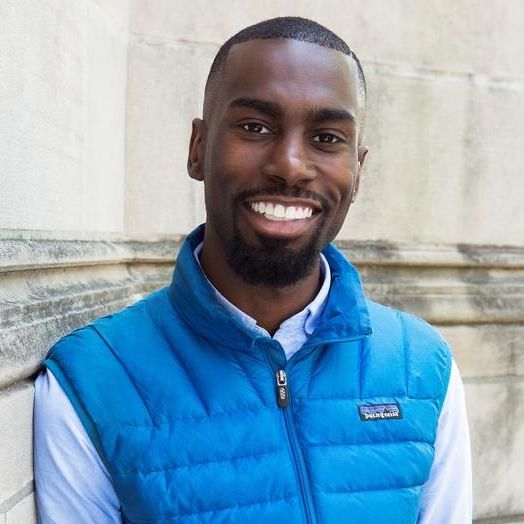
DeRay Mckesson
Recent Episodes
How Einstein GPT Brings Generative AI to CRM
Episode 12 | 03.07.2023
Sellers as Trusted Advisors and More Tips to Maximize Efficiency
Episode 11 | 03.01.2023
Opening the Doors of Opportunity for Black Male Youth
Episode 10 | 02.22.2023
How Salesforce Research Is Using AI to Generate Proteins
Episode 9 | 02.15.2023
CNBC Reporter and Author Julia Boorstin on What Women Leaders Teach Us
Episode 5 | 02.03.2023
Can Bringing Back the Woolly Mammoth Help Save the Planet?
Episode 4 | 01.25.2023