What is Grit and Why it Matters: A Conversation with Angela Duckworth and Kobie Fuller
- 0.5
- 1
- 1.25
- 1.5
- 1.75
- 2
Michael Rivo: Welcome back to Blazing Trails. I'm Michael Rivo from Salesforce Studios. I'm joined today by my podcast partner, Rachel Levin. Welcome back to the show, Rachel.
Rachel Levin: Great to be here, Michael.
Michael Rivo: Well, Rachel, today we're talking about grit. Can you tell us a little bit about what grit means to you?
Rachel Levin: Sam Elliott.
Michael Rivo: For those who don't know who Sam Elliott is, because they're probably are listeners who don't know who Sam Elliot is, who is Sam Elliot?
Rachel Levin: He's an actor, but he's like your quintessential cowboy with a deep voice who looks like he's just seen and lived it all-
Michael Rivo: Right.
Rachel Levin: And is here to tell you the story about it. So, that's just kind of the image that comes to my mind, people who are able to persevere in the most difficult of circumstances.
Michael Rivo: Well, it's appropriate for what we're all living through right now. And on today's show, we're going to hear from Angela Duckworth, she's a MacArthur genius grant winner, a professor and a best- selling author, all about grit. Her book is called Grit. And she's in conversation with Kobie Fuller, who's the Chairman and Co- founder of Valence Community.
Rachel Levin: Yeah. I mean, Angela's work is so interesting because she studies people who are these exceptional high achievers, kind of like you and me.
Michael Rivo: Well, one of the takeaways that was inspiring for me is that grit, Angela defines it as this combination of passion and perseverance sustained over a long period of time and how different it is from talent. So for those of us that may not have as much of a talent quotient, really lean into the grit side, it gives us all hope.
Rachel Levin: It does. It does. And I really liked when she talked about stress and how you optimize stress because I know when I get stressed out, I feel like I can't even think anymore. And she says," Actually people who are really high achievers are able to take that momentum and redirect that energy and have it have a positive outcome." So that's something to work on.
Michael Rivo: Mm-hmm(affirmative). Well, let's jump right into the conversation. It's part of our Stories of Resilience Program, a series where small business leaders share true and inspiring stories about how they've navigated challenging times. Let's join Salesforce's Senior Vice- President of Small Business, Marie Rosecrans in conversation with Angela Duckworth and Kobie Fuller.
Marie Rosecrans: Angela Duckworth. Angela, welcome to the Stories of Resilience.
Angela Duckworth: Thank you, Marie. Thank you for having me. I'm excited to be with Salesforce today.
Marie Rosecrans: So glad to have you. And we also have Kobie Fuller. He's a General Partner at Upfront Ventures and the Co- founder of Valence. Fun fact, Valence uses Salesforce Essentials, our Customer Relationship Management Solution designed specifically for small businesses. Kobie, thank you so much for being here with us today. We're so excited to have you offer these unique perspectives, both as a co- founder, as well as a Venture capitalist. So welcome you too, to Stories of Resilience.
Kobie Fuller: Thanks for having me. Very excited to be here today.
Marie Rosecrans: Well, we're excited to have you as well. Now, Angela, I know you have a really dynamic background. You started your career in management consulting. You're a professor at Penn. You have written this best- selling book. You're a mother, you manage a family. You also are the CEO of Character Lab. I'm exhausted just saying all of those things, honestly.
Angela Duckworth: I'm exhausted too.
Marie Rosecrans: I bet. How you get it all done is really beyond me, but there's one thing that really ties, I think your life, to get so much of your life together. And that's this topic that you've written so much about, which is grit. For those unfamiliar, define grit as this unique combination of passion and perseverance. And as you can appreciate, many of the small businesses participating today have been in this grueling four- month long plus battle, and they're really trying to keep their businesses on track, but they're feeling very isolated and feeling incredibly worn out. And so you're the expert here, as a CEO, a mother of two daughters, a professor, can you talk us through a little bit about how these small business owners can really juggle their priorities when life can have them feeling pretty depleted and worn out?
Angela Duckworth: I'm happy to. And one of the reasons I'm really excited today is I study people like Kobie. I try to find high achievers who are, in whatever they do, outliers, positive deviance they're sometimes called because they're in kind of the far right tail of the distribution. And then I just try to ask the question as a scientist, what are they doing? What are their habits? What are their mindsets? What were their influences in a project of kind of reverse engineering greatness so that we can all learn something and maybe get a little greater ourselves, should we want to? So that quest has led me to this idea that one thing that high achievers have in common is this combination of passion for what they do and perseverance sustained over really long periods. And that combination of like, oh my gosh, I'm kind of obsessed with this. Like I'm thinking about it, not just 09:00 to 05: 00, but I'm thinking about it on Saturday and Sunday. Like I go to a neighborhood, I'm kind of walking around, a thought comes into my head, that sustained over a really long periods of time, years, decades and in some cases, even a lifetime combined with being the hardest worker and very resilient. I mean these pieces together, passion plus perseverance over really long periods is not only a hallmark of high achievers. It's very different from talent. And I'm not saying talent doesn't matter, but this thing called grit is not correlated positively with measures of intelligence or physical talent. So I think it's very different from... Some people would think like there's your potential and there's what you do with it. And I think as a scientist, I'm more interested in what you do with it.
Marie Rosecrans: Got it. Now, Kobie, resilience and grit as Angela does mention, they are two topics that you're extremely familiar with. And through each phase of your life, you've really mastered the art of juggling priorities and honing your own sense of endurance. You were the captain of the Harvard track team. You've co- founded Valence. You are a really successful Venture capitalist. I'd love to have you kind of tap into how you've been able to tap into these experiences to contribute to the successful career that you've had today.
Kobie Fuller: Yeah. And still trying to hopefully carve success. I don't look at myself as successful. I look at myself as always trying to just get to the next level. And I think the day in which I feel like I made it, I think I'll probably start failing. And all of the experiences I've had on my life definitely have shaped who I am today. You mentioned being cap in the Harvard track team. Track experience and what I had during those years was pretty, pretty intense. Sophomore year, I still remember our team came in last in Ivy Leagues. And people walked away from that meed just their tail between their legs, totally shamed. And it was at that point where honestly, many of my teammates quit. They actually didn't come back the next year. So I looked at myself, said, what am I going to do? Am I going to just walk away the same way? Or am I going to actually realize it just takes whatever it takes to actually show up on the track and win and get to that next level. So junior year I just worked really, really hard, spent more time in the weight room and on the track. And I got better. I got better to the point where I was an example to some of my peers on the track team. At some point they wanted me to be captain. Was captain senior year. And I still remember that first meeting I had with the team. What I claimed in front of the entire team, one, those opponents that I'd have to go up against that year, they're going to see the back of my spikes. So I put out the statement where they had to hold me accountable to that success. And then two, I asked them to join me in that like, let's try to do something different this year. And that meant that we all just put in the work, had that high level intensity in terms of realizing for us to actually get to not last place, but potentially first place, it just took that level of grit, perseverance and just hard, hard work, passion and obsessions and as Angela will say, in regards of what it means to actually achieve the greatness you're looking to achieve. And we didn't get first place, but we still got third, which is our best showing at that point and over 20 years of the program's history and actually in 30 years, we fast forward 10 years from there. And for me personally, yeah, those opponents, they did see the back of my spikes. So I was able to still succeed there. And it was that experience actually that helped me realize that in life, whether it's athletics professions, it's following these two boys I have, sometimes it takes what it takes. It takes the work to put in day in, day out and loving what you do. And there'll be some points where you're back maybe against the wall, maybe tired, but you have to grind through. And track, for me, was a very, very, very clear sport where it's very binary. There's no subjectivity in terms of winners and losers. There's a gun, there's a track, go. And then you're either first or you're last. And to me, I kind of approach life in that way. So that's kind of what I think shapes me in terms of where I am today as an athlete mindset.
Marie Rosecrans: What a fantastic set of stories. And I don't typically say this, but congratulations on the third place finish. It sounds like you really brought the team up from last place to third place. And as long as you're winning, that's all that matters. So Angela, I want to talk a little bit about something that people are feeling a lot about right now and that's stress. These are very uncertain times, really uncertain for a lot of small business owners and founders out there. You talk a lot about optimizing and managing our reactions to very stressful situations. And one of the things that I really want to call out about what you talk about is that we must first acknowledge these emotions before we can truly harness their power. And so what strategies do you have to offer for these small business owners? Because we are here to be of service to them in this Stories of Resilience Series. How can we help them better manage stress because they're feeling it from all different directions?
Angela Duckworth: Yeah. And what I will say about the science of stress, I think will tie in somewhat to what Kobie was talking about, right? When you have something happen, like coming in last place or something potentially more personal or less personal, they're all threats, right? And the human body has a stress response, which is what we do in our body and also in our mind, our brain, when we perceive that there is a threat, something negative and we're maybe going to be harmed. I mean that's really what we're all experiencing. So one reason why we should acknowledge the stress that we're having is normal is because it is. I mean, you're wired to have anxiety and to not sleep well and to grind your teeth and to have disruptions in your desire to exercise and so forth. Acknowledgement, I think is the first step. And one thing that I discovered about really gritty leaders is that they are not invulnerable. They're not invincible. They're stressed too. They're highly imperfect people it turns out, right? But what they're able to do I think is get beyond that first step, which is acknowledging, and then having fully understood that they're having a normal response to stress or to failure or to last place, et cetera. They do something I think that not everyone does. And that is to say, okay, what part of this puzzle can I control and do something about? Which is also why I love the rest of the Kobie's stories. It's like, what happened junior year and then what happened, right? Because in the sequence, like, okay, acknowledge it. Okay, now I'm going to focus on maybe part of this puzzle that I have control over. Like I can go to the weight room, I can work harder. I think for all of us experiencing stress right now, we can ask like, well, what are the things that I can do? And there's nobody who doesn't have something they can do. And I think that is the most adaptive way. When I say optimizing stress, the research I'm talking about is mostly done at Stanford, by a professor named Alia Crum. And she uses this very useful language. Many of us think about minimizing stress, but we should be thinking about optimizing our response to stress. Not that we want to have zero stress or that we want to have zero stress response, but that when life hits us with negative events that are threats, that we may even use it. Right? And some great, great leaders think about using that energy, which is part of like the elevated heart rate, the arousal, the sort of scanning the horizon for fuel really to take those few things that you can change and you can control and really do everything you can with them.
Marie Rosecrans: I love that, being able to use stress as momentum rather than holding you back. Such excellent, excellent advice. Next time I have a sleepless night I'm definitely going to be thinking about how I need to be using that to my advantage. So thank you for that. I'm going to take a little bit of a pivot here, Kobie, and I would like to have you talk about your experiences in analyzing businesses as an investor. And specifically, I'm looking to have you share maybe some of the unique qualities that you look for in either small businesses or founding teams as you look to see if they have the grit, if they have the passion, the perseverance to make it through and be successful. So would love to kind of tap into what's the secret sauce behind that?
Kobie Fuller: Yeah. The number of things that for me are extremely important to figure out is how to make investment decisions. Because this is very much a people business, when I invest in a company, I'm sitting on their boards, I'm talking to them potentially even daily. So first and foremost, I want to understand like, this individual, would I want to go on a long journey with them, go on a mission with them. For me, it's understanding does this founder look at this business that they're building as truly a mission because mission- driven founders approach the aspect of company building entirely different. They look at it as a purpose, a reason why they're actually sort of existing on this planet to actually bring this product to market. And so for me, if someone's actually trying to start a business that's more oriented around manufacturing capital and money and not to actually do some greater calling that they feel truly in their gut, that to me is something that is just a red flag personally, in terms of what will happen when there is a bump in the road, when there's a massive pandemic, where then they have to entirely shift years and think through what does it take to actually survive the next 12 months or so. So for me, mission- driven founders are extremely important in terms of who I want to spend time with. And then next as well is, can I trust them with money? Can I trust them with a dollar? If I gave you a dollar, what are you going to do with it? Are you going to go run and spend it on something silly? Are you going to use that dollar and are you going to plant a harvest? If you're going to plant a harvest, that's who I want to actually share my capital with. And I want to share all my capital with, because this harvest that can be created, especially if it's aligned in terms of mission they're trying to build, can be somethings magnificent. I'll have the privilege to be a part of in terms of this investment process and journey. So for me, it's all about those subtle aspects of who's actually running the business. On top of the basic things like what's the product, is the market large enough, those types of basic mechanics. Those are things that you can look in any slide and figure out if it's actually worthy of Venture capital. But for me, those subtle aspects are what separates good from great.
Marie Rosecrans: You call them subtle, but they're so hugely important and very distinctive in terms of a company's ability to succeed. So thank you so much for sharing that. So Angela, I want to drill down a little bit on the topic of teams and how important it is for teams to work together, because a well- oiled team can certainly make or break a company, particularly if they're not working well together. So as you can appreciate right now, a lot of teams, one of the topics that's come up over the Stories of Resilience programs that we've done over the last few months is the uncertainty, the pressure that team members feel right now with everything going on, whether it's at home and at work. And so I'd love to have you give us some advice or strategies for leaders on how they build, help their team members build that resilience that is so critical in order to make it through these coming months, quarters and years, frankly, we don't know. Right? And so would love your guidance on that.
Angela Duckworth: Oh, there's new research that's coming out of, well, Kobie's alma mater and also mine, Harvard University. There's an economist there named David Deming who's been studying teams, like what makes a great team player and what makes a great team. And it's hard to do because you basically have to like randomly assign people. It's like multiple team configurations. Anyway, he did all that hard work. And one of his conclusions is that a great team member is somebody who is a really watching for what the emotional goings on are of the other team members. Right? So if you're on a team with four other people, you could be thinking 100% about the task at hand and you might think, oh, that's the ideal team member, somebody's who's thinking about the problems and possible solutions. But it turns out in his research, and this is now also coming out of lots of other people, including professors at Wharton, which is where I teach, that team members are very socially intelligent and they're watching for facial expressions and they're catching like, oh, wait a second. You're confused. We actually have to pause here. Or like, I don't think you're on board with this. I think actually that emotion that I'm reading could be frustration and anger. So that ability to not only be great in terms of skill and knowledge on the kind of work of the work, right, but also having this interpersonal skill and especially being inclined to try to read other people's emotions is really important. And I would add to that research older research that says, in addition to being able to read facial expressions, like noticing the furrowed brow or the tightening of the lip, basically you should ask people because as good as the most socially intelligent person is, even if you're the Oprah Winfrey of team members, you very often get it wrong. Like you think somebody is mad at you, but they're just tired because they couldn't sleep last night. So practical advice for building teams and leading teams is that you make it a norm that maybe for example, when you start meetings, you somehow go around with a very quick like, how are you feeling? And you create a norm where people are just basically constantly on some of the same wavelength, I guess, about how other people are doing emotionally.
Marie Rosecrans: Such great, actionable advice. I know that that's something that a lot of teams probably did early in the pandemic, but it's even just as important to do it now and continue to do that in the future.
Angela Duckworth: And it's hard, right? We're all tired. Aren't we all tired and in a bad mood, or maybe it's just me. But these things that we should do are also kind of hard to do when you yourself are fried. But yeah, it doesn't make it any less important. It makes it more important.
Marie Rosecrans: Yeah. It's so important to have some intention around asking. You talk about the nonverbal communications, but also just asking, checking in with people to get a sense of how they're doing. So it's important all the time, but particularly important right now. So a quick follow- up on that, you have studied some of the most incredible athletes and athletic teams, even national Spelling Bee champions. I noticed that you've studied them too, to really understand what makes them gritty. And so I'd love to have you talk a little bit about how those learnings have helped you become a phenomenal leader and CEO of your own company. What have you taken crosstalk.
Angela Duckworth: Oh, I'm not a phenomenal CEO, but we'll address it. So I'm not surprised that Kobie ran track. I'm not surprised that he did it for multiple years. I'm not surprised that he became captain. Actually one way that I have tried to assess grit without asking someone to fill out a questionnaire that by the way is totally fakeable. So for example, thinking more about how you would hire somebody for grit or how would you know that somebody is gritty? I very often find that it is evidenced by, for example, when they were in college, multiple year commitments, often in sports, honestly, where you can track real progression, right? It's not random who becomes captain and it's not random that you did it for multiple years as opposed to one year. So this idea that you could learn to be passionate and persevering in one domain and then have it carry over, because now you're running a VC fund or maybe you're running a company, I do think that is very often what happens is that you learn a life lesson in one domain. And then maybe with the assistance of parents or coaches, or maybe in rare cases, you figure it out on your own, you're like, oh, this is also what it's like to run a company or this is also like, however it applies in another domain. I, myself, I think I am pretty gritty, but I am not a great leader. So I am the Head of Character Lab, this relatively small nonprofit. But I think one thing just to say, when I was listening to Kobie talk about mission- driven leaders, I have that, and I loved his list. Right? It's like mission- driven leaders who are also able to take a dollar and plant a harvest as opposed to like buy a cheeseburger, I guess. Right? But I might also add to that, I think, and this gets back to why I wouldn't call I'm a great leader, is that, I think that you want somebody who really enjoys, because not just mission- driven. It's mission- driven and that you have to enjoy at some kind of very visceral level what you do. I love psychology, right? I want to read this paper, maybe it's a Friday night, I want to read the paper. I don't love being a leader. So I think the great leaders are mission- driven by values and purpose. And they really like this thing that they do. So if it's consumer products, they just really enjoy something about consumer products. So I think that's why I am not a truly great nonprofit and there's a executive director named Sean and everybody reports to him. And I think, for him, that's where he gets his energy.
Marie Rosecrans: So it sounds like in what you just talked about, you talked about mission- driven, planting a harvest, but you also admitted that perhaps you have some limitations as a leader, but you brought in some really strong leadership around you to lead that team. So I think that that's certainly very challenging.
Angela Duckworth: You could count it. Maybe that counts, but you know what I mean? But in terms of the inspiring leader, he's there every day and helping everybody be their best, which is what a great leader does, that actually doesn't give me energy. Maybe an investor, like you Kobie would say like certain aspects of companies are exciting to you, but you'd rather be a VC than the person who's in the operational seat because of where you get your energy. I don't know if that applies. I would love to hear.
Kobie Fuller: It's exactly that. I'd rather be on the side of the table versus spraying every day, because I feel like I'd be a horrible CEO, but I feel like I'd be better to be on the side of the table, helping multiple companies. Because I also just get bored very quickly. So if I'm in one thing way too long, then I'm like, okay, I just...
Angela Duckworth: Our next... Yeah, right.
Marie Rosecrans: I love the power of self- awareness right here. So one final question before we move on to my favorite part of this session today. So Kobie, you have experienced grit, perseverance throughout your entire career. You talked about track team captain, you worked in a startup, you're a co- founder, now also an investor. And so love to get your advice and guidance a little bit on how small businesses should push forward during these times of uncertainty. Maybe can you talk a little bit about the place that you've gone to or what skills, attributes, characteristics you've been able to tap into when times have been uncertain for you?
Kobie Fuller: Yeah. And I'd say right now, we're in a moment in time of biblical proportions, in terms of what's going on. It's hard to go to any resource or document or book that can truly help you understand how to deal with the complications of both emotional, potentially physical and health and financial stress that may be happening in running a business. So there's, this two things that I've been leaning on very heavily during these times. One, basic principles that I've learned in the last couple of years through one of my friends named Trevor Moawad, he's a mental performance and conditioning coach that's worked the likes of Russell Wilson, Alabama, Crimson Tide, and the likes. And he has a book called It Takes What It Takes, which preaches the power of neutral thinking and really trying to stress that if you just latch onto this notion of neutral, which partially means just breed out all the negativity that, that'll help you actually optimize performance in a material fashion. And there's data that he cites in the book that suggests that negative thoughts have a 10 X impact on your performance. And there's a multiplying effect if you actually articulate negative thoughts out loud. So the power of the spoken word actually is truly impactful. So there's a four to seven multiplier effect on top of just the thinking of the thought that can result in there being, in essence, an effect of 40 to 70 X probability or increased chance of that negative thought or that spoken word affecting your performance. So for me, just not saying negative things out loud has a huge impact on my ability to optimize my mindset for success. So I've been applying that for the last few years since spending time with Trevor and it's been critically important for me right now, given these trying times. And the second, honestly, in a world of we're seeing sort of this biblical activity. Like I go to the Bible, I go to my faith to be quite honest. Every Sunday of going to now, I've been doing a virtual small group and listening to sessions, focusing on this notion of just when life doesn't work, relying on faith, faith will help. And for anyone that believes in the higher power, leaning on that to actually better carry you through those moments, I found being incredibly, incredibly helpful. And the Book of James actually goes through a lot of these actual tenants around finding hope, being patient, keeping emotional help, loving thy neighbor, being anchored in storms. These are all things that right now are super relevant. So between faith and this practical sort of mindset principles, that's been the two things I've been anchoring myself in, in terms of getting through these troubling times.
Marie Rosecrans: Thank you so much for sharing that. I know that, Angela, you probably have some Friday night reading now.
Angela Duckworth: I know, I wrote it down. I was like, It Takes What It Takes. Did I get that right, Kobie?
Kobie Fuller: Yeah.
Angela Duckworth: It Takes What It Takes. Okay, got it. Yeah. I've heard of Trevor.
Marie Rosecrans: We're going to wrap this up with a fun tradition that we have on Stories of Resilience. It's a rapid fire, so no overthinking allowed, but it's inspired by one of my personal heroes, Brené Brown, who is our second speaker on Stories of Resilience. These questions are really intended for the audience to get to know you on a personal level. So I'm going to start with Angela and then go to Kobie for every question. Does that sound good? So Angela, what's one thing you've let go of this year.
Angela Duckworth: Oh my gosh, haircuts. Haven't gotten one since this year.
Marie Rosecrans: That's a softball. Kobie?
Kobie Fuller: I'm going to piggyback on that, shaving.
Marie Rosecrans: All right. How about a small business that you've supported this month?
Angela Duckworth: Okay. I have been supporting my local yoga studio, who's doing Zoom classes and they're great. And they've been saving my life. So I'm trying to support them.
Marie Rosecrans: I love that. Kobie?
Kobie Fuller: I recently bought a jigsaw puzzle from a company called Puzzle Huddle, which are jigsaw puzzles for diverse backgrounds of children. So that's something that I recently bought a couple of weeks ago.
Marie Rosecrans: Fantastic. What are you reading right now?
Angela Duckworth: Me?
Marie Rosecrans: Yes.
Angela Duckworth: I'm reading, like the guy who wrote Crazy Rich Asians wrote this book whose name I can't think of. It's completely vacuous. That's what I'm reading.
Marie Rosecrans: Love it. Kobie?
Kobie Fuller: Berenstain books to my children.
Marie Rosecrans: All right. And then last question, who inspires you? Angela?
Angela Duckworth: I want to be Carol Dweck when I grow up. So she's a psychologist who gave the world growth mindset and she's a Stanford professor. If I become half of Carol Dweck, I will live twice as much of life that I wanted to live.
Marie Rosecrans: Love that. Going to have to Google her right after this. Kobie?
Kobie Fuller: I'd say honestly, probably the countless frontline workers right now. They're just keeping everything running in this country. I don't take it for granted in terms of all the incredibly hard work and risk that they're putting their lives into. So probably them.
Marie Rosecrans: It goes without saying. Thank you so much to the two of you. This series is all about being of service to small business owners and founders and entrepreneurs. And I can really say that the two of you in sharing all of your wisdom, your practical advice, you've helped us do that. So thank you again for your time today.
Michael Rivo: That was Angela Duckworth and Kobie Fuller speaking with Salesforce Senior Vice- President of Small Business, Marie Rosecrans. We hope you enjoyed today's show. For insights into this topic and others, head over to salesforce. com/ blog for resources to help guide you through today's most challenging economic and social environments. I'm Michael Rivo from Salesforce Studios. Thanks for listening.
DESCRIPTION
What is grit? Is it something that you’re born with? Is it a skill you have to practice? Or is it a combination of the two?
On today’s episode, Angela Duckworth, a MacArthur Genius Grant winner, academic, and author, explores that question with Kobie Fuller, the Chairman and Co-Founder of Valance Community. Marie Rosencrans, an SVP of SMB Marketing at Salesforce, leads the wide-ranging conversation. They discuss what qualities are common in overachievers, how leaders use stress to fuel themselves, and what it takes to build a gritty team that will succeed in the short and long term, regardless of the obstacles thrown in their way.
Today's Host
Michael Rivo
Today's Guests
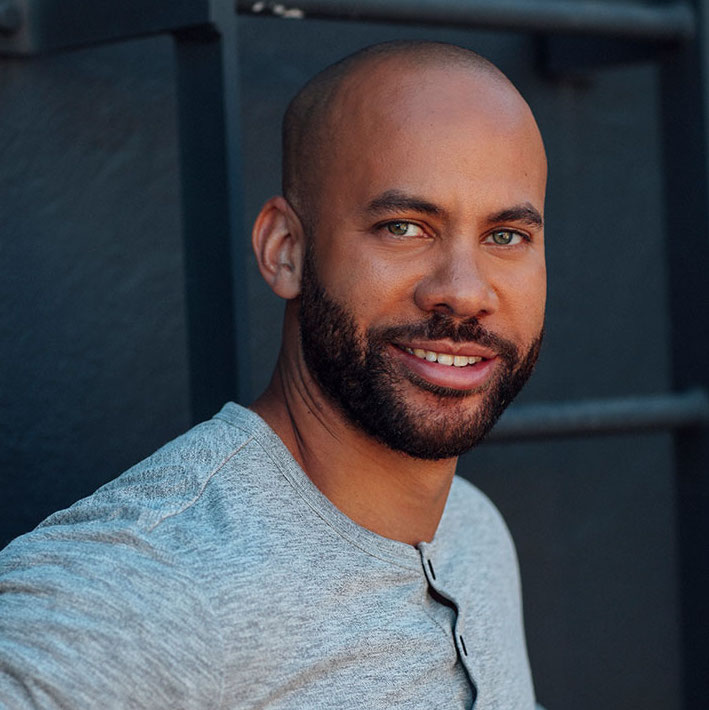
Kobie Fuller

Angela Duckworth
Recent Episodes
How Einstein GPT Brings Generative AI to CRM
Episode 12 | 03.07.2023
Sellers as Trusted Advisors and More Tips to Maximize Efficiency
Episode 11 | 03.01.2023
Opening the Doors of Opportunity for Black Male Youth
Episode 10 | 02.22.2023
How Salesforce Research Is Using AI to Generate Proteins
Episode 9 | 02.15.2023
CNBC Reporter and Author Julia Boorstin on What Women Leaders Teach Us
Episode 5 | 02.03.2023
Can Bringing Back the Woolly Mammoth Help Save the Planet?
Episode 4 | 01.25.2023