How To Build Successful Partnerships with Nonprofits: A Conversation with Khali Sweeney and Jessica Hauser
- 0.5
- 1
- 1.25
- 1.5
- 1.75
- 2
Michael Rivo: Welcome back to Blazing Trails. I'm your host, Michael Rivo, from Salesforce Studios today. We're discussing how companies can engage with non- profits more effectively. We'll be talking with Khali Sweeney, founder and CEO, and Jessica Hauser, Executive Director of Downtown Boxing Gym. The gym is a Detroit based free after- school academic and athletic program that provides students with the tools they need to succeed. But before we get into that, joining me now is Cathy Campbell, Creative Director of Brand Values& Social Good at Salesforce, and Shirleen Lavalais, Associate Creative Director at Salesforce. Welcome to the show, Cathy and Shirleen.
Shirleen Lavalais: Hello, thank you for having us.
Cathy Campbell: Thank you, Michael.
Michael Rivo: Yeah, absolutely. So you guys have been working with Downtown Boxing Gym for, I think, many years now. Cathy, can you tell me a little bit more about the relationship?
Cathy Campbell: Sure. We met Khali and Jessica about three years ago. Sam Allen contacted us and said that he was working with a really terrific nonprofit and just heard their amazing story. So in the process of that, we developed a brand narrative, a brand story, an entire identity system, advertising campaign, some ideas for their websites and on and on and on. But it was that first meeting that just really stirred our souls.
Shirleen Lavalais: And one of the things Sam heard from Khali was that oftentimes corporations and organizations show up to volunteer and then they disappear after a month or two, kind of never to be seen again. Right? And that's something Sam did not want to happen with the Salesforce team and the Downtown Boxing Gym. And I think what we did was come in with a place of creative ignorance, like" Khali and Jessica, tell us your story. We don't want to create a story that we think it is, but we want to hear from you." And I think coming in like that, we were able to really create a creative brand system that spoke about DBG, that spoke about the kids, that spoke about the founders and spoke about where they want to go in the future. We weren't seeing this as a short- term project that's three to four months. It's like, this is an ongoing thing. It is a part of who we are as Salesforce and who we are as people, individually, that want to contribute, that want to give back. So I think that was a bonus that we weren't seeing this as, okay, this ends now. But as long as they want us here, we're here.
Michael Rivo: Yeah. And I'm curious, have you guys worked on other volunteer projects in your careers that have turned out differently or not been the same experience as this?
Cathy Campbell: I have definitely throughout my career. I think the biggest recipe for failure is a misalignment of expectation. And either the organization is expecting something different from the creative work that you are developing or conversely, the creative team has some ideas about what it should be rather than what it is. So when you really, really connect to the people whose mission it is to do this work and you really fully immerse yourself into that story, that's when the magic happens. And when you try to impose some creative idea that you think it should be, that's when the problem is. I do feel like with DBG, very clearly from the start, number one, it's all about the kids. And number two, it is academics and athletics. So every time we came in with a new creative that maybe you wanted to really romance the boxing side, it's like nope, that's only half of the equation.
Jessica Hauser: Yeah.
Michael Rivo: And so it sounds like really finding that organization that aligns with your values and speaks to you is so important. Any tips or thoughts around how to go about finding who you want to work with and how to find the right fit for your volunteer work?
Shirleen Lavalais: I think maybe it's what moves you, right? Being a black woman and seeing kids in a community that people may feel underwhelmed about or not expecting the extraordinary from them does move me to want to help, to want to make people see, this is a kid, just like when you were 11 and you were 10, this is the same person. This is a kid that wants to have fun, that wants to learn, that wants to see the world, that has a whole mind. Right? And for me, it was like for this project, I saw myself and was like, how can I make sure people see that these kids are here and they have a ton of talent and they have so much to offer and we're just giving them the highlights. We're just like, here's some of what they can do. So I think maybe it's what moves you. Whether it's kids or gardening or science, it's what moves you and it's what do you want to learn about? Because me, as a designer, I love when I get to learn, I love when I get to buy books on a subject to learn about more about a subject that I can put into my project. So what moves you is what would be my answer.
Cathy Campbell: And for me, it was definitely about connection, the connection to the people and the connection to Jessica and Khali, their relentless optimism about the potential for these kids. That sparked me, and I think it sparked the entire creative team, seeing their commitment.
Michael Rivo: I think getting the chance to bring what you do to the table is so important. And maybe that's something to think about when you are thinking about how you can volunteer or create something for your company to be able to do that. Well, thank you guys so much for talking about this project and for bringing this to Blazing Trails and being on this episode. So Cathy and Shirleen, thank you for joining us today.
Shirleen Lavalais: A pleasure.
Cathy Campbell: Thank you, Michael. It was a pleasure.
Shirleen Lavalais: Yes, thank you.
Michael Rivo: Joining me today is Khali Sweeney, founder and CEO of Downtown Boxing Gym, and Jessica Hauser, executive director of Downtown Boxing Gym. Khali and Jessica, welcome to the show.
Khali Sweeney: Good to be here.
Jessica Hauser: Thank you for having us.
Michael Rivo: Wonderful. Khali, let me start with you. Can you tell us a little bit about the origin story of Downtown Boxing Gym and what the organization does?
Khali Sweeney: I had already been thinking and contemplating it in my mind that it was a lot of young kids in my neighborhood who was just hanging out like I was hanging out when I was a kid. I had a pretty rough upbringing. I didn't go to school like other kids. I basically was passed from grade to grade without ever learning how to read or write. I didn't know how to read or write until I was almost 30 years old, maybe that same year that I turned 30. So I've seen a lot of kids just doing the same thing and going through the same process that I was going through. When I went home and started thinking about what I really wanted to do and I wanted to give back to the community. So what I did was I saw a building, I had the idea in my head already. I went to the guy and told him," Hey, can I rent the building?" And I brought a couple of kids that I had, that I was already trying to semi mentor. And so I started working with those guys and word of mouth spread and people came in and the hook was that I'll teach you how to box if you first do tutoring. So our model was going to be books before boxing. And people bought into it and it's okay, books before boxing, that's what it's going to be. And so we're a after school program that provides academic support. We have a whole curriculum of computer coding classes, reading intervention, math intervention, health and wellness, a whole host of things, sports sampling. We just try to fill in the gaps where we can support the kids, where they might not get the resources that they need.
Michael Rivo: It's an incredible program. And part of what we want to talk about today is how companies can engage with nonprofits more successfully. Jessica, can you tell me how to set up a relationship between a company and a nonprofit for success?
Jessica Hauser: Yeah. Well I actually think the turning point in the relationship between Downtown Boxing Gym and Salesforce happened during a conversation that Khali had with an executive, Sam Allen, where I believe, and Khali correct me if I'm wrong, but I think that Khali said to him... There was a group here, they were here through the program, the Leading For Change I think it was called at the time and doing great work and helping us think through some culture stuff, a problem that we were trying to solve. And Khali said to Sam Allen," This is all great, but you guys, at the end of the day, you're going to go back to your job and we're never going to see you again because often, unfortunately that's how corporate relationships end up playing out, right? You get a couple of minutes with somebody and then you never see them again. And that really stuck with Sam because that's the truth. We found out that he went back to Salesforce after and had conversations with other leadership and just said," We can't be one more company that just parachutes in for a week and then you never engage again. And so we've been building ever since. And so I think having it rooted in that kind of level of commitment is rare and incredible and really the best way to make true impact. And as a result of that, Sam was able to inspire some of his other teammates. They flew to Detroit, saw the work we were doing, really stopped and listened to how they could leverage their expertise to help support us. Right? As a nonprofit, there is no revenue generation. We're always going to be understaffed, we're always going to be under resourced. That's just the way that it is. And so to be able to tap into people who really can dedicate their time and hone their craft and then lend to us has been instrumental. So the development of that relationship is taking the time, really listening, really making a commitment and having leadership driving that I think is what makes it work.
Michael Rivo: Tell us a little bit about this design and communication project that we worked on during the pandemic. I saw some of it presented at one of our all hands for our creative group. And it was amazing, everything that was done from mass to signage, to music, to video, a really incredible program. So tell us a little bit about it.
Jessica Hauser: Yeah, it was incredible. So the beautiful thing is, again, going back to this longstanding relationship, so there is connection to the brand, an understanding of our work. And during the pandemic, it was our commitment to say, we never miss a day of programming with our kids. We switched to virtual for a bit and then we started working on how do we get our kids back in person as soon as it would be safe to do so. And as part of that, Khali was talking to us constantly is like," All right, we need to have signage that's not scary. We need to make the building where if we're going to do this, that kids feel included, they understand the messages." Everyone's already terrified, how do we not feed into that but lift our kids up, lift our families up. And so we reached out to Shirleen and then some others and just said listen, we have our reopening plan in a Word document that is not at all, can't that out to anyone, right? It's not going to connect with anyone. All the signs that you can find online were not kid friendly at all, not culturally sensitive at all. And they just took it and ran with it, which blew our minds, especially in the middle of a pandemic. Of all times, everyone's slammed, everyone's scared and they just jumped in with two feet and took it, it went above and beyond what we could have ever imagined from, like you said, they helped make masks that were DBG branded and fun, the signage was kid friendly, on brand. They did the six feet apart floor markers with riddles on them, which is perfect. And then there's a short version and a long version of our reopening plans and all the protocols which we shared out to our parents. Parents actually ended up taking it to the Detroit Public Schools saying," Listen, we hope that you guys," Detroit Public Schools," Do something as thorough as Downtown Boxing Gym because this is really making us feel as safe as possibly you could feel during such a crazy time." And so just to have that kind of support. So it was like brain power, creativity. And then they paid for all the printing of all those materials, which as an organization that literally had to triple our budget overnight in order to manage cohorts of kids and all the staff we needed to do that, we wouldn't have had it in the budget to print all of these things. We just feel like the team showed up in every way possible and made for an incredible experience. We never had a single outbreak of COVID and we've been open, our physical building's open since June of 2020 with kids. It really speaks volumes to having all those tools.
Michael Rivo: So how impactful was it to have a whole design team working on this communications package?
Jessica Hauser: It was a dream come true. Khali would sit back and focus on, we basically have a whole ad agency helping us, which is something that we would not have been able to afford. And we saw the impact. Just to have our brand consistent, how we saw our parents respond because the visuals of it made sense and connected, how the kids respond. And so to have people who are experts in that space, lending their expertise and taking the time to really help us connect, there's really no words for that.
Khali Sweeney: It felt good to finally put all those different logos to rest. We had too many different logos, too many different brands floating around, too many different colors to have it all, uniform and streamlined and just professionally done. It was amazing to me to see that. And I love it now, just when I look up now out of my office, I can see the artwork and the work and the time that was put into it. So it's beautiful.
Michael Rivo: And from the company side, I know this was something that everybody loved to work on. Khali, I'm curious, I know there's a lot of growth plans for DBG and what you guys are doing moving forward, has this relationship or this type of work driving that, or how has the work that was done going to impact how you guys are thinking about that moving forward, some of the work that came out of this?
Khali Sweeney: It just adds another layer of confidence. When other people see how partnerships can actually work and work together, how you can work together with different corporations and this is mutually beneficial for everybody. It's like when one domino falls, the others can come behind. When everybody puts their hand on it, it makes the lifting a lot easier, if that's the answer to your question. We do plan on replicating this program and to have a partnership with somebody who's well- recognized. It just adds another layer of confidence.
Michael Rivo: I'd love to hear more about the growth story too, from when you started. You'd mentioned that you went to that building and said," Hey, I want to start this here," and now it's come so far. Just tell me more about that process.
Khali Sweeney: The process, it was a real journey. I put everything I had into that building. I didn't really have a plan. I had absolutely no plan whatsoever. I put everything into that building. I put everything into what I was doing because I believed in it wholeheartedly. I've seen so many kids getting carted off to jail. I've seen so many guys who really couldn't read or write, just like I couldn't, who had a failed experience in school. And so it's like, okay, I'm going to commit myself to it. So I committed so hard to it that I actually ended up homeless. I literally ended up homeless. I was living in the gym itself and the kids would walk by and see me in the car and be like," Do you live in the car? I see you when we get out of school?" I went from 218 solid muscle down to 130 pounds. With that, the parents trusted in me, the community came together and we all made it work. And from there, Jessica came in, we made it officially put it on paperwork, put it down on paper. Before it was just a dream idea and we were just doing it, just basically just doing it without a plan. Jessica came in and put a plan to it and her and a couple other people, some other people that she round up with a bunch of cold calls. She caught a bunch of people with a bunch of cold calls and she ended up homeless herself, actually. She'll tell you that part of the story, but she actually sold one of her cars and sold everything out of her house to keep the thing going, keep the lights going. Yeah, it was a journey. Once we passed over a little bump in a road, we started gaining traction and momentum and we ended up moving out of that 4, 000 square foot building to now, what we have now is a 37, 000, something like that. What is it?
Jessica Hauser: 27,000.
Khali Sweeney: 27, 000 square foot building with a bigger space, more classroom space. We had one little classroom, where everybody had the crowd into one little room. And I'm glad COVID didn't come then, because we all would've caught it back then because we were like elbow to elbow with each other. Now we have a place that's a lot of space. We have new HVAC systems and stuff that with HEPA filters and all that type of stuff, and this state- of- the- art stuff now. She can tell you about it. It's a more eco- friendly building now. So yeah, it was just a journey.
Michael Rivo: Yeah. Well, that's quite a story. And Jessica, so you head up more of the business side from what I understand. Tell me a little bit about coming from that journey and then reaching this turning point. Was there something where that kind of clicked or what made that happen?
Jessica Hauser: Yeah. And let me be very clear in case it ends up in the podcast. Khali had an incredibly solid plan. He had an incredibly solid plan. It's just that he's one human being and one human being cannot, it is impossible to drive the mission, truly take care of and support 65 kids and fundraise and manage a board. It is impossible. What I benefited from, Khali doing the work for three to three or four years before I got involved. And so I was able to take a tested mission out into the world to say, something amazing is happening here, this is working, and start to gain traction and be a voice to tell the world what was going on in the space. And so I just feel like I had the easier part of the job because the hard work is the work with the kids. The hard work is that early grind trying to work out all of the kinks, right? I was able to pick up a pretty much perfected product and take it out into the world to get support. And for us, a major turning point really was taking the leap of faith into the new building because in our old building, we were maxed out. We had a waiting list, there was no room in the building for more kids. So there was no way to grow or evolve the program. So really rallying the support to jump into that space was a major turning point. And then going from just Khali and I paying to work at Downtown Boxing Gym to hiring a fundraiser, starting to have staff, really starting to put the pieces in place to build on Khali's dream. All of those are monumental turning points that have allowed us to get to the point today where we are ready to replicate. We have the data to back up the impact of the work. We have corporate support in a way that we can ask other corporations," Hey, this is how Salesforce is doing it, here's the impact. Are you guys willing to step up in the same way?" Having that model that we can take to others is how we'll be able to continue to grow.
Michael Rivo: I wonder how you would advise other nonprofits. Coming into this conversation, I was thinking it would be interesting to get your perspective on if you're in the early stages of a nonprofit and trying to figure out how to engage, whether it's companies or bring on staff or grow the program, what are some of the lessons learned that you might want to share?
Khali Sweeney: For me, Jessica, you can definitely, by all means, tell him how you feel. For me, it was always about doing the work and doing exactly what you say that you're going to do. That right there in itself, when you do what you say that you're going to do, and you actually do the work, people will see that and they will come to you opposed to you going to them. Once you go to them, now you have to prove what you're doing, all these types of things like this. But when the word gets out, like for the gym, honestly, like she said, I was into this work three years into the work. I was already doing the work for three years. And you have to not have founder's syndrome too, because I had founder's syndrome. It was like I had committed so much to the mission, I was so embedded in it for three years. I had offers from people and people were reaching out to me. I didn't even hear them. I just was still going with my head down. And I was just working, working, working, working, and I had founder's syndrome. So you got to be able to listen too. And so I just kept doing the work and the word got out and it spread around the city and it spread to some of the right places and people started picking up on it. So like Jessica said, when she came in, she actually had to slow me down and stop me like," Hey, listen, wait a minute. Trust me, you need to do something. You cannot let this go like this, because it's going to fail at the rate that you're going, what you're doing. You have to do X, Y, and Z and put the pieces together." So being able to step aside and hire the right people to do the right things, that's a big key to it, lesson that I learned.
Michael Rivo: And Khali, what were some of the things that you were maybe missing because you were so head down on the work? Somebody in a similar situation, what are some of those things that maybe they're not thinking about that they should invest their time, but they're not doing?
Khali Sweeney: The first thing was to actually have a business plan, a five- year business plan. Have a five- year business plan, get an audit. Have an audit, keep all the receipts. Keep the receipts for everything that you do, and get an audit early on because stuff like that came in handy when opportunities arise. When opportunities came about, people asked," Do you have a business plan? Hey, have you had an audit?" And I was like," Just so happened that we did," because that paid off. And I see a lot of guys right now, young, out here doing things. And I always tell them," Get an audit, keep all your receipts and just really have a solid business plan."
Michael Rivo: Yeah. And Jessica, what are some of those things that people in the early stages a nonprofit should be thinking about or that can help accelerate?
Jessica Hauser: Yeah. I think all those things are really nice to have, but the reality is it's challenging. Right? So what I always say is everything Khali said is spot on. And I think finding a team, a second person that's willing to jump in with you. So I think really respecting the fact that mission driven people need to drive the mission and there should be somebody else who's layering onto that and helping to do the business plan because it's not that the mission driven person can't, but you can't do both, especially not at the beginning. It's a massive amount of work. So what I recommend, what I always recommend to people when I'm talking to them is if you are the one driving the mission, whether it be one of your board members or somebody that you're really close with, see if they're willing to step up and help you complete some of these other tasks, right? Find somebody who's more traditionally trained and let them help put together the business plan. Why would you even take your eye off the real work, which is the mission to do that? No, let somebody else help do that if you trust them, right? As long as they're not going to take you astray, I just think finding that support early on, to say it more succinctly, is really critical. And then advice for how to manage corporate partnerships early on the truth is, is to keep the scope as limited as possible because it can get really overwhelming if you don't have a staff of people to manage the partnership. And be honest and open with the partner about what you can and what you can't handle and what you can and can't take on.
Michael Rivo: What's most important in those conversations, once you find a partner or they find you? Khali, you were saying earlier, you weren't even really hearing that because you were so focused. What are the right questions to ask? And is there some things you think about when starting a relationship like that?
Khali Sweeney: Me, myself, personally, you have to align with the mission. There's a ton of people who can tell you I've turned down some of the wealthiest people in the world who wanted to just jump in, but their heart wasn't in the right place. And you can come with a whole lot of money, but if your heart is not in the right place, and our mission don't align, then we would only do damage to the mission. So for me it's like you have to align with what we're doing, you have to understand the way that we're approaching this situation. And if not, this is not the thing for you, for us. And people looked at me crazy, like," Those guys have tons of money." I'm like," I'm sorry, I don't align with their mission. Our values don't connect."
Michael Rivo: Right. That's what it really all comes down to. And then Jessica, anything on this sort of once you get past that and you say, okay, I do want to work together, are there any just real key things that you should think about there?
Jessica Hauser: I think it goes back to that conversation Khali had with Sam Allen, right? So it's align with the mission. As long as that's there, then also having a follow- up really straight conversation level setting on expectations and making sure that those align. And if you get past that, then I think having a really clear scope of work so that there's a beginning, middle and end.
Michael Rivo: Yeah, it's just thinking about it just like any other kind of business relationship at that point, and operating it that way. Well, I know we've got a couple of minutes left. I would love to hear some stories about how the program has impacted some kids. And if there's anything you can share about the impact you've had in the city and on some kids' lives, are there any stories that either of you want to share about that?
Khali Sweeney: We just had 12 kids just graduate. So go ahead Jessica, I know you can tell him about that experience.
Jessica Hauser: Yeah. Right. We did just have 12 kids graduate. I think we can share one kid's story because he was sharing it publicly on his own. But one of the young men, well now one adults, he's 18 I think, that just graduated has been with us since he was in seventh grade. And when he first came to us, could not read at a kindergarten level. We actually ended up getting him into a really high quality college prep high school, obviously then he was in ninth grade. Was only reading at a second grade level at that point, but the high school agreed to let him attend as long as he was still coming to Downtown Boxing Gym. And we felt that that was really the only way that he was going to be able to get caught up in the amount of time that he had left before he graduated high school, because he needed intensive support during the day and our support in the out- of- school time. He just graduated and got accepted into an HBCU that he's so excited to start in the fall, reading at a second year sophomore in college, that's the reading level he's reading at now. And he's so proud of himself. We're so proud of him, but just that transformation, right? In many other situations, people would have said," Well, it's too late. You're already past that point of no return. We can't do anything." And at Downtown Boxing Gym, we don't buy into that kind of thinking. We double down, triple down, figure out how do we put every resource possible in place to make sure that every kid can grow and thrive and live out their dreams.
Michael Rivo: That's an amazing story. I don't know if you want us to say that we have 100% high school graduation rate. 98% of our high school graduates have gone off to college and are now graduating from college. We also focus on social emotional elements, which are actually better indicators of a young person's success. So we're always working on kids growing in those areas as well. It's such incredible results. Two questions. I guess one is what do you attribute it to? What are you guys doing that's so right? And then how do you scale it? How can you take, and not necessarily only through the Downtown Boxing Gym, through what you guys learned and the methods, how do we scale this to impact more kids?
Jessica Hauser: I think why it's so impactful is really the foundation and the standards that Khali laid from the beginning. One of my favorite quotes that resonates to me is he always says," We don't see bad kids, we see kids that haven't been heard yet." And the essence of that quote, that every single young person should have an opportunity to really be seen and heard and for adults to figure out what is really going on, and let's put all the tools in place so you can thrive. That is why we're successful, right? We do everything and anything. Kids are with us all long, all year round for years. So we have unique opportunities to build on those relationships. And we do it, like I said, in a way that is unrestricted, right? If you need uniforms, we get uniforms, reading, reading. If you love music, let's put in a music studio.
Khali Sweeney: And now, what we found out was that a lot of kids were going to college and the transition was so overwhelming to a lot of kids who went off to college. So now we're going with those kids for the first three years of college now. So instead of just stopping right there, we're going on into college with the kids. We set up a dedicated staff to literally be on call 24 hours a day for these guys. They shoot emails to our staff, college and career readiness type stuff. So that's just another layer that we just added into it maybe about two years ago.
Jessica Hauser: Yeah, officially. We've done it-
Khali Sweeney: Yeah, we've done it. Yeah.
Jessica Hauser: Officially. And as far as replication, Khali started an apprenticeship program three years ago. We have one of our alumni who's been shadowing him for some time. And really, it's been our test case, right? What can be passed off, what can't, how do we fill in the gaps for the things that can't be just easily transferred. Done a lot of work around culture. How do we pass that off? And then we're also looking at replication in a couple of different ways. We're putting together a licensing package so that we can help support other organizations that it doesn't have to be boxing and academics as the combo. It's like," Hey, here's best practices of what we've seen to be successful." And then we will also replicate Downtown Boxing Gym in other cities as well.
Michael Rivo: And lastly, what's the most important thing companies should think about when they engage with non- profits?
Khali Sweeney: It's more beneficial when a company rolls up their sleeves, and like she said, dives in deep. And so often a lot of guys, they come through, they do the tour. It's like going to like a soup kitchen where you go in and you hand a bowl of soup out for that day. You feel good and then you leave. Well, it's still people still hungry. That soup kitchen still needs people there to work. You know what I mean? There's still a line around a block. That one day that made you feel good, you know what I mean?
Jessica Hauser: Please always be really mindful. Take the time to educate yourself before you enter a space. And if you don't know, just don't... Just to be really, really respectful of the communities that you're stepping into.
Michael Rivo: Yeah, that's great. Good advice. Don't talk if you don't know what you're talking about. So this has been a fantastic conversation. Thank you both for joining today. And I'm excited to get this episode out the door.
Khali Sweeney: Thanks for having us.
Jessica Hauser: Yeah, thank you.
Michael Rivo: That was Khali Sweeney, founder and CEO, and Jessica Hauser, executive director of Downtown Boxing Gym. If you want to learn more about the organization, go to www. DBGDetroit. org. That's DBGDetroit. org. Thanks for listening today, and if you liked this episode, be sure to subscribe wherever you get your podcasts. I'm Michael Rivo from Salesforce Studios.
DESCRIPTION
In 2007, Khali Sweeney was on a mission - he had a vision for a unique youth program that combined education with boxing. Today, that vision has come to life in the form of Downtown Boxing Gym in Detroit. But the startup process wasn’t always smooth sailing (it never is), and a lot of lessons were hard learned.
Today, Khali joins the podcast, along with Executive Director of Downtown Boxing Gym, Jessica Hauser, to discuss how companies can build successful partnerships with non-profits. He and Jessica touch on the importance of building a team early on, why shared mission is vital when pursuing partnerships with businesses, and the different ways businesses and nonprofits can work together to leave a lasting impact on those in need.
Today's Host
Michael Rivo
Today's Guests
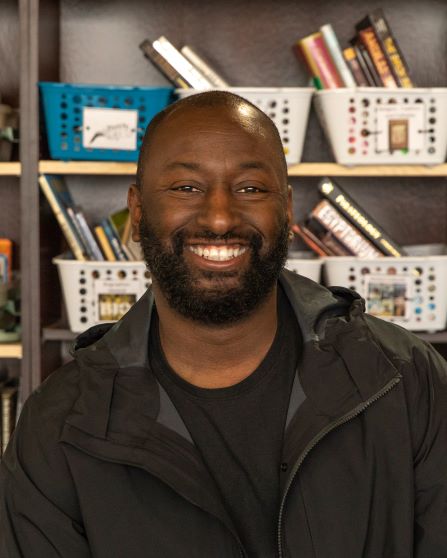
Khali Sweeney
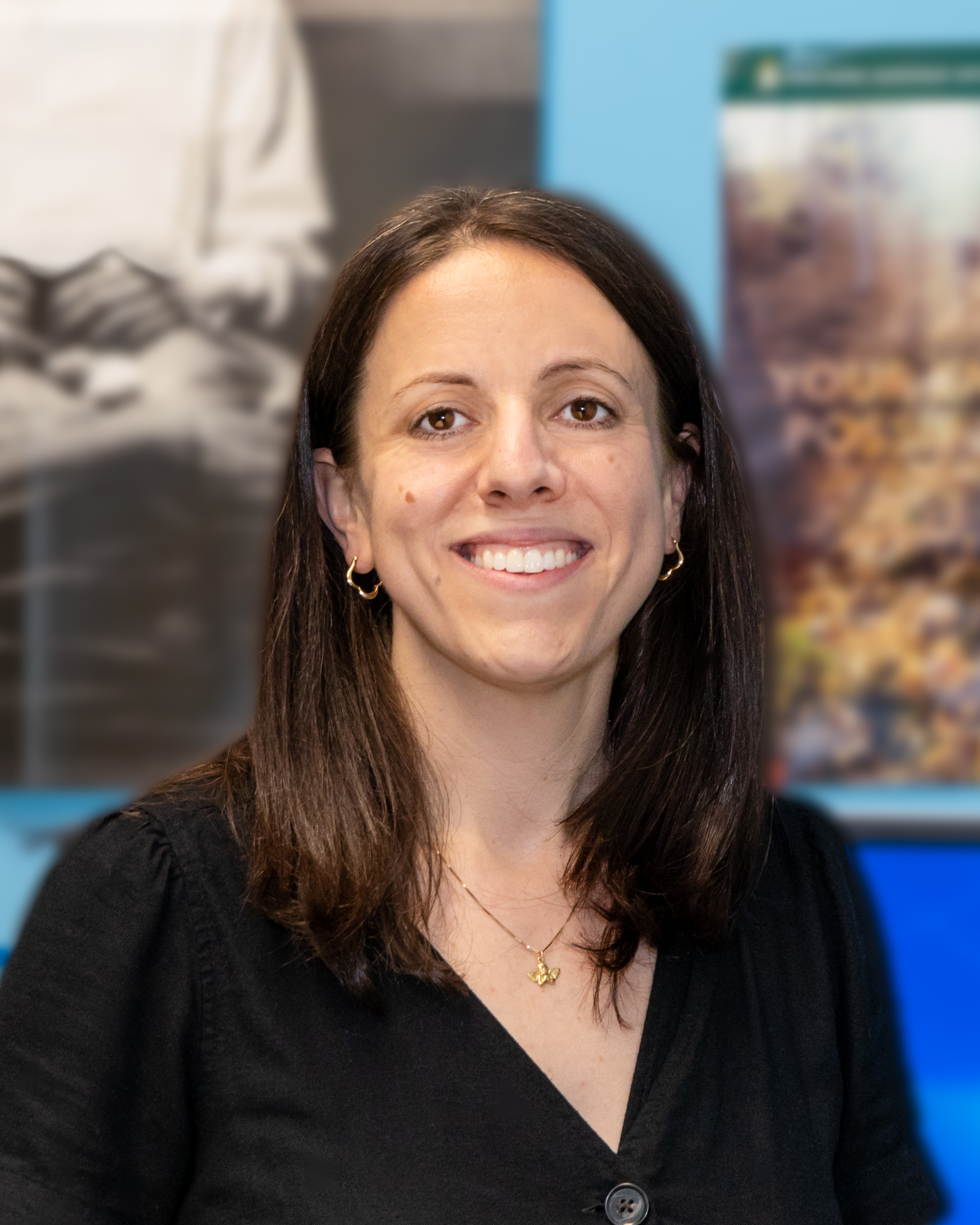
Jessica Hauser
Recent Episodes
How Einstein GPT Brings Generative AI to CRM
Episode 12 | 03.07.2023
Sellers as Trusted Advisors and More Tips to Maximize Efficiency
Episode 11 | 03.01.2023
Opening the Doors of Opportunity for Black Male Youth
Episode 10 | 02.22.2023
How Salesforce Research Is Using AI to Generate Proteins
Episode 9 | 02.15.2023
CNBC Reporter and Author Julia Boorstin on What Women Leaders Teach Us
Episode 5 | 02.03.2023
Can Bringing Back the Woolly Mammoth Help Save the Planet?
Episode 4 | 01.25.2023