
Taking Action To Address Anti-Asian Racism And Violence
- 0.5
- 1
- 1.25
- 1.5
- 1.75
- 2
Michael Rivo: Welcome back to Blazing Trails. I'm Michael Rivo from Salesforce Studios. Today, I'm joined by my podcast partner, Rachel Levin. Welcome to the show, Rachel.
Rachel Levin: Good to be back Michael.
Michael Rivo: Well, we're here today, Rachel, to talk about a really important topic. Can you tell us a little bit about the show today?
Rachel Levin: Yeah, Michael. Well, today, we're going to be hearing from our Leading Through Change series, and it's a show that's dedicated to the rise in anti- Asian violence. Did you know that anti- Asian hate crimes are up 150% this year? It's astonishing, right?
Michael Rivo: It is. I've been hearing about it in the news, and then the recent events in Atlanta and other events, but I didn't realize that the numbers were so big.
Rachel Levin: Yeah, it's crazy. And obviously, there's a lot of historical context here that we can't forget, dating all the way back to the Chinese Exclusion Act of 1882 that suspended Chinese immigration to the US for 10 years.
Michael Rivo: Mm- hmm(affirmative).
Rachel Levin: And of course, during World War II, virtually all Japanese- Americans were forced to leave their homes and sent to prison camps, a lot of them right here in California during the duration of the war. So it's a really painful history.
Michael Rivo: It is a painful history. And of course, the Atlanta shooting where a young man murdered eight people in a massage parlor, and six of them were Asian women. And so today's show is really about exploring the roots of anti- Asian discrimination and what we can do to better support the Asian community. So, Rachel, who are we hearing from today?
Rachel Levin: So we'll be hearing from former governor of Washington, Gary Locke, the CEO of Rise, Amanda Nguyen, the co- founder Stop AAPI Hate, Dr. Russell Jeung, and Emmy Award- winning TV news anchor, Dion Lim. So we've got some very serious experts and people who are very committed to this issue that are going to be talking us through it.
Michael Rivo: Right. Well, it's an important show and we hope that you enjoy it. So now, let's listen to Neeracha Taychakhoonavudh, executive vice president, global customer success and strategy at Salesforce, moderating this very important discussion.
Neeracha Taychakhoonavudh: This continues to be a deeply troubling moment for myself, personally, and for all of us. Like so many, I have a very, very heavy heart towards the violence against anyone, but particularly for the Asian community. It's really horrifying. It's inexcusable and it has to stop. And that's one of the reasons why I'm so thrilled to be part of this conversation today. Now, joining us as a very special guest to kick us off, who has been outspoken on the topic of recent anti- Asian violence and hatred, please join me in welcoming the former governor of Washington State, the former secretary of commerce, and the former ambassador to China, Gary Locke. Thank you for being here today.
Gary Locke: My pleasure, Neeracha. It's really great that this is being part of your Leading Through Change, supported by Salesforce. So my compliments to all the organizers.
Neeracha Taychakhoonavudh: Thank you. Now, given your career, your extensive career in public service, because that intro takes a long time to get everything in there, you've been working both in the US and abroad, I wanted to start with this rise of anti- Asian violence. Considering the political environment, pandemic- related tensions, everything wrapped up in there, does this sentiment come as a shock to you?
Gary Locke: No. I think that's why words do matter, words that come from the top government officials, whether at the national level or at the state level, or your local level. We've seen a vilification of anything and everything Chinese or china- related over the last four or five years, and that has had an impact. When you're saying that this is the China virus, the kung flu virus, in a mocking fashion, the Wuhan virus, and then you go around with policies that say we don't want Chinese students coming to American colleges, universities to study because they're all potential spies, when you're going after all Chinese companies, even American companies founded by American citizens of Chinese ancestry that somehow they're all suspect, when you're going after Chinese social apps whether it's WeChat that's used by the Asian- American community, primarily Chinese, or even social media like TikTok, that has an impact. And obviously, there are some national security concerns between the United States and china. But to vilify all Chinese people, whether they're American citizens born in the United States of Chinese ancestry, creates that tone which then perpetuates that notion that Asian- Americans are foreigners, that they're not really loyal to the United States even though so many of our sons and daughters and many of our parents and grandparents served in the Armed Forces with distinction and defended our freedom. So, that all has an impact.
Neeracha Taychakhoonavudh: Now, some have said that a lot of it can be explained by the scapegoating, people looking for a scapegoat around the pandemic. But as Leah alluded to earlier, there is a rather long history of blame and scapegoating of Asian- Americans. How do we, as a community, reconcile that history, that shameful history, and really take measures to try to get out of that, to break that cycle?
Gary Locke: Well, first of all, we need to acknowledge that history. And as Leah indicated in her opening remarks, that started with the Chinese Exclusion Act of 1882, but also, laws that were passed throughout many of the states in the late 1800s, early 1900s, that actually prohibited primarily Asians, Japanese and Chinese people from owning land in America. Then, of course, you had the internment of the Japanese during World War II, hundreds of thousands of people born in the United States. And yet, were now behind concentration camps. And even though their sons went off to war on behalf of the United States and formed the 442nd Regimental Combat Team, the most decorated military unit in US history, fighting for a country that was putting their own parents and brothers and sisters and relatives in armed concentration camps. We have a history of that, and we have to acknowledge that. And also, Asian- Americans have to also recognize that our success is not monolithic. There's huge disparities in income, healthcare, jobs, and so forth. And so that we have to be constantly vigilant about our civil rights. And we need to ally ourselves with other groups who are also encountering discrimination, whether it's African- Americans, whether it's Latinx populations, and even Native Americans, because America does have a history of racism and vilification of all populations. And we need to join together and support each other.
Neeracha Taychakhoonavudh: I couldn't agree more. Now, if you look at your service in China, you were the first American of Chinese descent to lead the US embassy in Beijing about 10 years ago. And we talked about the vilification, the negative press around trade terrorists and travel bans, hacking: hacking is very high on the list of things, civil unrest in Hong Kong and, of course, the ignorance in some calling this the China virus. How has this affected overall, American opinions at a deeper level and in turn, our community of Chinese Americans?
Gary Locke: Well, I think it all adds up. As I indicated before, all these words matter. And as a society, we need to separate our disagreements and concerns, objections with the policies of a particular government, whether it's China or even Russia, or Israel, from the people of that country, and people whose heritage emanates from that particular country. Certainly, we would not go around saying that, just because the Russian government was involved in a massive hacking, that all people of Russian ancestry or hailing from Russia are to be viewed as second class citizens or spies. The same thing with Israel. We've had spies. Some of the most notorious espionage cases against the United States have come from Israel. We certainly wouldn't go around saying that the Jewish community are disloyal to America. And the same thing, whether it's with Japan, whether it's with Korea, whether it's with any country, and certainly with China.
Neeracha Taychakhoonavudh: It's interesting. I remember, in last year's presidential election, you, your image was used in an attack ad as a stand in for China. You, right? Taking it down to the personal level, even though you were born and raised here in the US. And you mentioned earlier, this whole concept of being a perpetual foreigner. How can we combat that stereotype?
Gary Locke: I think we really need to focus on the history of America, that except for the Native Americans, we are all foreigners. Whether our ancestors came on the Mayflower, on a slave ship from Africa, or a steamer from Asia, we are all foreigners. And we need to really promote the fact and recognize the fact that it's that diversity of people from all parts of the world, and wave after wave of people coming to America, with different languages and cultures, and even food and art and architecture that has really created that vitality, that dynamism that really powers America. And that makes America. That's what really makes America great. It's that diversity of people, and we need to recognize it. Whether we're 1st generation or 10th generation, we are all foreigners.
Neeracha Taychakhoonavudh: Absolutely. And what's been a particularly bitter pill for me is that there wasn't a lot of media coverage on the violence against Asians that really started right about a year ago. And sadly, has continued to escalate up until the events of last week. Social media conversations are very ugly. Why do you think this is the case?
Gary Locke: I think there is that media perception that we are somehow the model minority, or that we are very, very successful that we have blended into American life, when in fact we have a history of racism and discrimination against Chinese, Asian- Americans and so many other ethnic groups. And there's a perception that the Asian- American community has somehow made it, even though that's not true. There's huge disparity in terms of healthcare, income, nutrition, you name it. And we are not monolithic. Our own community also needs to address that and recognize that, and really try to address some of the shortcomings and the problems within our own community in terms of disparate outcomes, disparate achievement levels, struggles with violence, struggles with healthcare, struggles with economic security.
Neeracha Taychakhoonavudh: And obviously, it's been a tough year on so many fronts for people. How does the violence against Asian- Americans really shed a light on the broader issue in this country around hate crimes?
Gary Locke: Well, we have to recognize that there is an element within our society that have very dark hearts. And in some ways, it's been exacerbated over the last several years. There's a lot of anxiety and angst among the American people over jobs, over changes in the way of life and the impact of technology in their lives. And even just efficiency in businesses and manufacturing. For instance, a good friend of mine who used to head up the Ford Motor Company, said that it now takes 40% fewer workers to build the same number of cars than it did 25 years ago. And that's not because of outsourcing to other countries. It's because of robotics and automation. And the same thing in the forest industry. It takes so many fewer people to cut down and log those trees and to strip the bark and load them on to the bigger trucks than it did 25 years ago. That's certainly not because of outsourcing. And so there's a lot of angst, a lot of worry out there among the people in terms of their future. And then you have a person who comes around and says, " Well, I'm going to solve all your problems. I'm going to bring us back to the days of what life as you knew it 15, 20, 30 years ago, and we're going to do this by kicking out all the immigrants."" We're going to close off our borders. We're going to build a wall. We're going to make sure that those people from Africa don't come and we're going to go after China, et cetera, et cetera." So, that appeals to people. And that really brings out that scapegoating that people have a tendency to resort to. Scapegoating of all groups. And it almost authorizes, sanctions, encourages hateful language and hateful, violent behavior. And we're seeing that in terms of so many instances all across the United States.
Neeracha Taychakhoonavudh: Well, with the angst that we're seeing, and aside from maybe a secret time machine that someone has somewhere, how do we help people, whether they are people in the Asian- American community, or just people in general, how do we help them with their psychological and the emotional acts of both the economy, the pandemic, these violent acts? It's very hard to separate any one of these reasons. How do we help people who are struggling with that? How do we empathize? How do we really empathize with people's struggles?
Gary Locke: Well, obviously, government has a role in terms of support programs, with mental health counseling, more police patrols, but also attacking some of the core issues and the issues plaguing all communities of color. Better healthcare, job training and retraining, better education in our schools, financial aid so that students can attend colleges and afford a college education. But we also need leaders standing up, and from all sectors. From the nonprofit world, religious community business community, presenting an allyship and emotional support, because that all filters down into the everyday workforce. You have many of your employees that may say, " Well, I don't live near the Chinatowns of San Francisco or New York. And so it doesn't really affect me. I don't go into any of these malls where there might be Chinese restaurants or spas, or cosmetic shops and nail shops and things like that. So it doesn't really affect me." Well, it does. Just having conversations with your neighbors, your friends, your relatives about what's happening, and about the history of America, that we are a land, except for the Native Americans, foreigners. And look what we did to the Native Americans and how we herded them up onto reservations. And so many of them are the vast majority, living in abject poverty and just terrible conditions. We need to recognize, be frank about America. But what's great about America compared to many other countries is that we're willing to acknowledge our faults and our shortcomings, and we try to do better, to form a more perfect union. We're not great. We've made mistakes, but we need people engaged in talking about it so that we can, in fact, move all of our communities farther along, and to achieve the dreams and aspirations of everyone.
Neeracha Taychakhoonavudh: And I think you bring up a great point. There's obviously a role for government in this, broadly speaking. But in terms of even just communities and individual people, what do we need to do? What can we do? Everyone's like, " What do I do about this? I'm unhappy, I'm stressed, I'm angry. What do I do?" There's a lot of those questions we hear from the community at large. What can we do to combat the racism, the xenophobia and the violence towards individual groups? To your point, we are all foreigners here, ultimately.
Gary Locke: Well, certainly having community rallies, posting vigils, conducting vigils, just acts of solidarity, reaching out to people of other groups who are being marginalized and facing discrimination and oppression. Just reaching out, trying to learn more about each other's cultures and their histories, and their struggles, and the challenges that they face. I think it's really just everybody's stepping back, taking a pause and saying, " Wow, what is going on? What can I do to learn more?"
Neeracha Taychakhoonavudh: That's spectacular advice. Thank you. Thank you so much, Governor Locke. Really great conversation. So enjoyed having you. Thank you so much for joining us today.
Gary Locke: My pleasure.
Neeracha Taychakhoonavudh: Now, I'd like to move on to our panel discussion with some of the folks Leah introduced a little bit earlier. They're in the news. It's wonderful to be able to assemble such a wonderful panel. So please, welcome Amanda Nguyen, CEO of Rice and Nobel Peace Prize award nominee. We also have Dr. Russell Jeung with us, the co- founder of the Stop AAPI Hate website and professor of Asian- American studies at San Francisco State University. And finally, Dion Lim, Emmy Award- winning TV news anchor at the ABC Bay Area affiliate, KGO. So thank you Amanda, Dion and Dr. Jeung for joining us today. My first question, Dr. Jeung, I'm going to send it over to you. Last March, you were part of the team that created this Stop AAPI Hate website. And I do have to make sure everyone understands, AAPI stands for Asian- American Pacific Islander, a very inclusive designation that we use. Anyway, Dr, Jeung, you were part of the team that created this site to catalog acts of both verbal and physical violence against Asians. And we are so grateful for the site and all the information it's been able to compile over the past year. Can you share a little bit about what was in your mind, why the website is a necessary tool, and just the overall impact that you've seen in the last year?
Dr. Russell Jeung: Yeah. Thanks, Neeracha. And I'd like to thank Salesforce for inviting us today. Thank you for the large donation. We'd like to also thank Tableau, Jay Pierre, Jarred Velario, Jay Kim. They've been super helpful in us gathering the data and creating our dashboard. So thank you for the data engineers and analysts of Tableau and Salesforce. Like Governor Locke said, we knew that Asian- Americans suffer from both the perpetual foreigner stereotype. And so when a disease comes from Asia, we would be outcasted, blamed and attacked, and met with racist policies. We also knew that because we're the model minority to others, people wouldn't believe that we experience racism to the extent that we do. So we created this website to document the racism, the widespread racism that Asian- Americans are experiencing. Now, because we're based in the community, we did it in 12 different languages. And starting just last year, we were getting hundreds of reports daily, nationwide, we have them from every state, of the horrific incidents that Asian- Americans are experiencing. We've been able to document that it's happening in a variety of places, in schools, online, public transit, private businesses. We've been able to document that it's not just hate crimes that you see in the news, but there are civil rights violations. They are microaggressions that aren't really micro, but actually racially- traumatizing. There are a lot of instances of being coughed and spat upon. And so people are treating us like foreigners, or whom they think we should treat foreigners as outsiders, as objects to be attacked. And that's why sadly, I wasn't surprised about the Atlanta shootings, or what I've seen recently in the news about our elderlies who are getting attacked, because I've read daily, since March, the anger and vitriol directed towards Asian- Americans. And again, people are treating us as outsiders to be shunned and attacked, as objects, sexualized objects for Asian- American women, to be harassed and to be sadly, shot at now.
Neeracha Taychakhoonavudh: The latest statistics are incredibly disturbing. Also, primarily, because we believe it's largely under reported. So I think the latest ones I saw were 3, 800 acts of violence over the last year. And very importantly, 70% of them directed at women. And Amanda and Dion, and maybe we'll start with you, Dion, I'd like to just dig into that a little bit more. How do we as a society really reverse that trend? It's terribly disturbing and obviously, deeply personal.
Dion Lim: Yeah. First off, again, echoing Dr. Jeung's thanks and gratitude for all of you for having me. I have to say, we need to get something straight, that these figures that are collected by Stop AAPI Hate, this is just a drop in the bucket. Anecdotally, I wake up every single morning now, not wondering what am I going to cover, but how many instances are going to come flooding in to my different phones and from social media, and from different platforms? And really, that's pretty pathetic, isn't it? Wondering whose story is going to elevate itself? Is there video to support someone's incident that makes it more valuable than someone else's? So I think to answer your question, I think we need to understand that I would go so far as saying while there is no hard, concrete data supporting this, I know for a fact, anecdotally, that this is happening much more than we could even imagine. That 3, 800 number that keeps getting played out in the news, it's a start. It gets people to listen. And now the world is listening, but there are so many more stories that need to be uncovered. And I think part of the challenge in that is getting Asian- Americans to speak out, getting them to acknowledge that it is okay to bring a negative light onto our own people and to say this happened to us. I had a woman just two weeks ago, reach out to me via Instagram because she felt safe. Imagine this, it's social media so you're hiding behind a phone screen. You don't have to use your own name. You can hide behind an avatar. She said, " Dion, I'm deeply disturbed because my family owns a donut shop in Oakland. Every single one of my family members has been attacked, whether they had been robbed, knocked to the ground, or in other ways hurt, and called ethnic slurs. And yet, none of those have been reported." So I would say that we start with getting rid of that barrier, that it is socially not okay to share these incidents. Growing up Asian- American, many of you in the crowd could probably relate. Keep your head down, your nose clean, and don't cause any trouble. But now, it's time that we shift that mindset, that it's not causing trouble, that it is opening up the box so that way the rest of the world can see what's really going on.
Neeracha Taychakhoonavudh: That is so true, shining a light on it. I think if you can't measure it, it doesn't matter. So, that's what we always say here in business. So, Amanda, over to you. Looking at the trends, how do we as a society, work towards really reversing that?
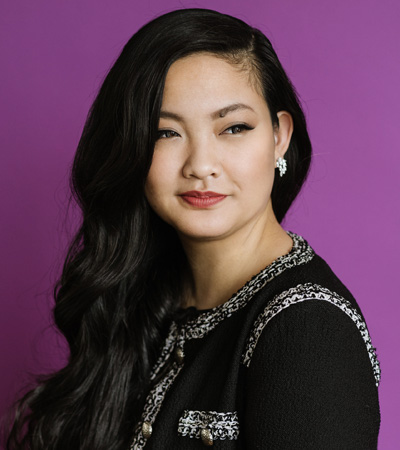
Amanda Nguyen: Again, I want to echo what everyone else has said, which is thank you so much for having me on, including my voice. But also, thank you so much for focusing on this issue. I'll just speak from the heart. It's been devastating. And for the past several months, my colleagues, the folks that are on this panel, and so many others have been baring our souls on television, warning of what may come. And what we have seen with this massacre is our warning being realized. And I think over and over again, I've said, how many more lives need to be killed in order for our stories and our lives matter? And so it is the worst form of validation. And in order to put a foot in front of the next, I hope that we are at an inflection point right now where people can finally recognize that yes, this is an issue. The model minority is a mess. We must recognize that in order to be anti- racist, we have to acknowledge the Asian- American experience. Now, I want to talk a little bit about the intersection of misogyny and racism, because that was at full display in this massacre. It's quite fascinating to me. I have done a large part of my work, the 33 laws that I have passed have been in addressing gender- based violence, specifically sexual violence. And as an Asian- American woman in the anti- sexual violence space, it has been fascinating to see the ecosystem of trolls, because there are racist trolls and then there are sexist trolls. And then the worst of them are combined and fueled together. And it's quite interesting that some people may say, " Hey, this is one thing or the next." It's both. It's really important to understand that when we objectify Asian bodies, Asian women, it increases the chance for violence. That's what Yellow Fever refers to, this sexual preference that has been perpetuated by Hollywood, the China Doll, the vixen, the dragon lady. All of these stereotypes have now played a hand in making us dehumanized. And when you erase a whole group of people and you objectify them, what you get is violence.
Neeracha Taychakhoonavudh: Thank you, Amanda, and for bringing up that intersection of racism and misogyny, which is something that I only, even just looking back at my journey, only just put some puzzle pieces together. Because I never really looked at it that way before. You also brought up the term model minority. I think we've referred to it loosely a few times. Dr. Jeung, if I can come back to you, from an academic perspective, as we talk about model minority, first of all, it would be great to make sure all of our listeners are clear on how we think about that. And then most people would say, " Oh, well, you're perceived as the group that has achieved the most success, so therefore it's a compliment." I get a lot of, it's a compliment, things which they really aren't. But the term model minority, how is it negatively... Has it been not a compliment to the AAPI community?
Dr. Russell Jeung: Yeah, that's a great question. In America, we usually have racial discourse, understanding racial history on a white, black binary. And people seek whiteness. Asians want whiteness in terms of they want the power status and maybe privilege of whites, but they don't want to be white. But there's another binary, another way Americans are racializing people. And it's on this insider, outsider binary. And sometimes, if you're a real American, or considered belonging, then Asians can be insiders. And that's when we're considered the model minority. We're white- adjacent, we're honorary whites. We're compared to other racial groups and seen as a model in that, oh, look at, they face discrimination, but they're hardworking, they're quiet, and so they're achieving. The problem with the model minority stereotype, of course, is that not all of us are hard working, sorry, or achieving. Not all of us are educated. And so it becomes this difficult standard for other, especially, youth to meet. And it also drives a wedge between us and other racial groups, because we're compared to other racial groups. I think though, right now, in times of war, in times of pandemic, in times of economic distress, we're more cast as the outsider. And Governor Locke talked about the perpetual foreigner stereotype. In history, that's how we've been treated. We've been excluded. We've been incarcerated. We've been quarantined. After Islamophobia, we've been cast as extreme terrorists. We've been detained. We have to register. Last year, President Trump cut migration bans, cut refugee resettlement, cut H- 1B visas, all perceiving us as outsiders, as dangerous threats to be excluded. So this perpetual foreigner stereotype is what's causing the hyper sexualization of Asian women. It's causing people to attack. No one hits us because, " Oh, you're so smart." They're attacking us because they don't see us as belonging. They're attacking our elders and pushing and shoving us because they think they have a weird accent. So this perpetual foreigner stereotype is much more operative, especially to those who are immigrants, who are limited English- speaking. And maybe Salesforce people may experience the model minority because you're engineers and educated. But I think for the large swath of Asian- Americans, this perpetual foreigner stereotype, it's been operative, it's insidious, and it's killing us at this moment. So I think Asian- Americans seem to acknowledge that stereotype much more seriously. It'll help us connect with our elders, those who are immigrants. It'll help us connect to others. Like Governor Locke said, we're all foreigners. And if we could get into the pain of being outcast and not belonging, then maybe we can gain some of that empathy and solidarity that we want. So I think for me, this is my soapbox. Asian- Americans have a role to play in American sense of justice and belonging, as we disrupt and dismantle that insider, outsider binary. We're on the outside. Let's use our foreigner status to see what's broken about America and make changes.
Neeracha Taychakhoonavudh: Thank you. That's super insightful, the insider, outsider binary, and really focusing on the perpetual foreigner side of things. We talked a little bit about shining a light. Dion mentioned video. And Amanda, I'd like to throw this one at you. You posted a video in February that went viral, that really called upon national media to stop ignoring the coverage about these anti- Asian attacks. Given our culture, why do you think that we still didn't get the attention, even with brutal video evidence from the start? And we didn't get a lot of attention until a bunch of people were killed. Is that the new normal?
Amanda Nguyen: Well, it certainly isn't new. It has been normal, though. And it's been normal for a very long time. Asian- Americans have been systematically erased from the narrative we tell ourselves as a country. Let's talk about the structures. This is from the federal government. There was a study in 2009 that showed that some federal agencies don't even include Asians in their definition of racial minorities. Let's talk about Hollywood. The way that our stories are told, if they are even at all told, are through a lens of who are the writers? Majority white men. And so that's why we have stereotypes that have been very damaging. Look at our education system. Our history isn't taught from not only our grief to our excellence, people just don't know who we are. How can people empathize if they don't know, our history? How can we organize if we don't know our previous collective power? And finally, the mainstream media. This is the distribution of information that people consume in order to know about what's going on in the world. And if we aren't included in that, and if we aren't included with responsible journalism, then how are we supposed to even show up to other communities? How will other communities get to know us? And so this is certainly something that has been going on. And the reason why I turn to social media is because social media is a democratizing platform in many ways. And it was because if these structures, that systematic structures have been walking us out, then I was going to turn to another place. And it was like fire with gasoline. Millions of people responded within 24 hours. The next business day, Neeracha, CBS reporter, White House press corps asked, the White House, the President has seen it. It is so important to understand that there are millions of people who have been erased, but are there, are grieving. And it's not only that people now feel like they can't have their grief validated. The other important half of it is other communities who responded in solidarity. The call to action was to target this system. It wasn't to other communities. And it's because it is these systems that have been gatekeepers to our humanity.
Neeracha Taychakhoonavudh: Dion, I'd love to get your insight into this. Obviously, the system, the binary nature, the systems that have been gatekeepers, what are your thoughts on that?
Dion Lim: Yeah, I have so many thoughts. I don't even know where to begin practically. I do have to piggyback real quick off of what Dr. Jeung had said, because these stereotypes, for the longest time, growing up in very white parts of America, Ohio, Connecticut, and then going on to work in Kansas City, places like North Carolina, I thought, " Okay, well, these stereotypes were kind of funny." I didn't understand just how detrimental they were, because I was a very mediocre student with C minus chemistry grades in schools. So, when it came down to being the first Asian- American woman to be at the helm of a Monday through Friday newscast, in all of these different markets before coming to San Francisco, I didn't realize the power that that position held, because representation is one thing. Neeracha, we actually were on a panel for Salesforce a couple years ago, where I spoke that it's not just the people who are on TV in the media that need to be representative of your community. It's the people above that. It's the people who are making the decisions. And for me, what I've discovered in truly the past year, and when I started using my voice in a very robust way, I had penned an article, a chronicle for the San Francisco Chronicle, an editorial about finding my purpose. It's that because there is the stereotype of us being meek and being able to be dominated as Asian females that have been so detrimental. You see it in movies like Austin Powers, that when I'm chasing an attorney down the street, shoving a microphone in his face, or going head- to- head with the district attorney, and pummeling him with questions, people are shocked. They don't understand what's happening. And then it gets their attention. And then it has this snowball effect. So it's that importance of bucking the stereotypes more than ever, and being transparent about our own journeys, that no, we don't all excel in chemistry and math. Then I think also, to answer the question about the media, I think it's really hard to get those stories told. And there's a reason why. I remember being in an editorial meeting when I worked in Tampa Bay, Florida, and there was a discussion about Trayvon Martin. And a number of my colleagues said, " Oh, racism isn't even a problem in America. Really? I didn't know that." And nobody spoke up. And I was the only one who said, " Actually, it's been a problem for a very long time." But unless we can have some proof behind the pudding, and actually bring some convincing to the rest of the group, and get them all on board to see why it's important, you know it's going to be an uphill battle. And like Amanda said, with a video, sometimes that's enough to get people's attention. For me, what started it was a can collector. Asian- American man in San Francisco's Bayview district, he was collecting empty cans to help provide for his family, to bring to a recycling center. And he was humiliated on camera, and made to cry and feel like a nobody. And that is the visceral emotional thing that needed to be turned on, that switch for the audience to start paying attention. And granted, it was just one incident. But fighting for that one story, I'll be very transparent about this, took a couple days, because I was actually sitting on that during my off days. And I sent an email about it. And looking back, I should have included that visual to get people to understand, because no matter what background you are, you can tell that if someone is being assaulted with a stick, and being made to feel like they're six inches tall is just wrong. And if you don't respond, then clearly something's wrong.
Neeracha Taychakhoonavudh: I totally agree. We've seen a lot of effective results from storytelling, but that's not the only way. And Dr. Jeung, I'd like to turn this over to you. I think one of the things you've said is that leaders should respond with science and data. You know their stories, their sphere, but science and data can be really effective. So can you talk a little bit about that?
Dr. Russell Jeung: Yeah. So I'd like to say that along with Amanda's social messaging, that was really critical, Asian- Americans using social media to amplify the message. And because we have journalists like Dion who could get stories because of their advocacy, because we have data, I think those have actually started this Asian- American movement at this moment. And it's actually, people from all walks of life also sharing their stories. So all the analysts, the coders, the engineers from Salesforce and Tableau who've helped us, they have sparked this massive movement to make change. We've had high school students help build our original dashboard, and so we have people from all walks of life using data well, to show what's happening. Again, what we are receiving, 3, 800 incidents are just a fraction of what's happening, but we're able to use with our data, more precise focus on where racism is happening. Again, it's happening in schools. It's happening online. It's happening on public transit. And so given the different sites, we could come up with specific policy prescriptions. We could target and make clear recommendations to policymakers with our data and with evidence- based practices. So we're trying to reach both hearts with our narratives and our minds with the data to make change. With the data, we're able to demonstrate again, the trends that women are harassed 2. 3 times more than men, that elderly are disproportionately attacked, and vulnerable populations are being targeted. So for me, the data has been critical in both telling the story, along with the graphic video footage, along with journalists and influencers amplifying it. And it's been critical and coming up with clear solutions. There's a lot of focus on hate crimes, but that's not the breadth and width, or the widespread nature of the racism we're experiencing. And I think that's a part of the story. This is to show that racism is popping up everywhere. I talk about how the Eye of Sauron, the Salesforce Tower is shining on Asian- Americans now, but it's shining all over Asia- America. And we need our elves and dwarves to come help us.
Neeracha Taychakhoonavudh: Thank you. Thank you.
Dr. Russell Jeung: We're the hobbits. We can't fight for ourselves.
Neeracha Taychakhoonavudh: We have a very wide- ranging discussion. We've gone into hobbits, to the democratization of social media. So thank you. We're wrapping up our time together today, and I'd like to ask each of you to maybe give us your call to action. What can individuals listening do to educate themselves to break this cycle of racism and bias? So if you could, just give us a quick call to action and we'll wrap the panel. So, Amanda, I'm going to throw it over to you, first.
Amanda Nguyen: If you want to be an ally and you don't know how to, it's as simple as reaching out to the AAPI people in your lives. You can, of course, go and support Asian businesses. Please do that. And maybe folks may not know what to say. So something as quick as, " Hey, I don't even understand what you're going through, but I just want to say that I'm here for you. What can I do?" Something as simple as that can make or break the relationship that you have.
Neeracha Taychakhoonavudh: Thank you. Dr. Jeung, what is your quick call to action for our audience today?
Dr. Russell Jeung: I think Asian- Americans are under a state of siege. And when we're threatened, we can go into fight mode, we can go into flight mode, or we can go into flock mode. And I see the Asian- American community flocking together to protect each other, for grieving and for comfort. But we're also flocking together to stand up for our communities. And I'd like to see Salesforce employees to flock to our communities, to go out, buy boba, go back to patronize Chinatown and support our businesses. Because we're the racial group with the second highest joblessness rate right now. And because of racism, people are avoiding our restaurants or salons. And we need that type of community support.
Neeracha Taychakhoonavudh: Thank you. And then the last word goes to you, Dion.
Dion Lim: I would end by saying, think a little bit like a journalist, in a well- rounded way, because we are seeing an influx every single day on our phones, on social media, on TV, of these images of horrific acts towards Asian- Americans. But I would also encourage everyone to take a step back, think about the circumstances surrounding them. Also, think about the validity of what you're seeing, because the way that you react, and I've seen reaction equally as bad in some cases to the actual racist incidents themselves, because the way you react is going to be either very effective or detrimental to Asian- Americans and our community as a whole. And half the battle, at least for me, as a television journalist, is to get people to pay attention. And if they don't pay attention to you in the right way and they see you as combative, and they see you as very stubborn, and not contributing to the solution, and just wanting to complain about it, that's a difference than raising awareness and making change.
Neeracha Taychakhoonavudh: That's wonderful. Dion, Dr. Jeung, Amanda, thank you so much for being with us today, and for lending your voices to what I've found to be personally, a very meaningful conversation.
Michael Rivo: That was Neeracha Taychakhoonavudh, executive vice president, global customer success and strategy at Salesforce, speaking with the former governor of Washington, Gary Locke, the CEO of Rise, Amanda Nguyen, the co- founder of Stop AAPI Hate, Dr. Russell Jeung, and Emmy Award- winning TV presenter, Dion Lim. I'm Michael Rivo from Salesforce Studios. Thanks for listening.
DESCRIPTION
The last year has seen a rise in AAPI (Asian American Pacific Islander) violence. Today’s conversation explores the long history of this discrimination, and what we can each do individually and in our communities to help put an end to it.
You’ll hear from former governor of Washington State, Gary Locke, CEO of Rise, Amanda Nguyen, co-founder of Stop AAPI Hate, Dr. Russell Jeung, and Emmy award-winning TV news anchor, Dion Lim. They discuss the negative impacts of the “model minority” and “perpetual foreigner” stereotypes, why education of Asian American history is vital to changing the narrative, and how we can help amplify Asian American voices and stories.
Today's Host
Michael Rivo
Today's Guests
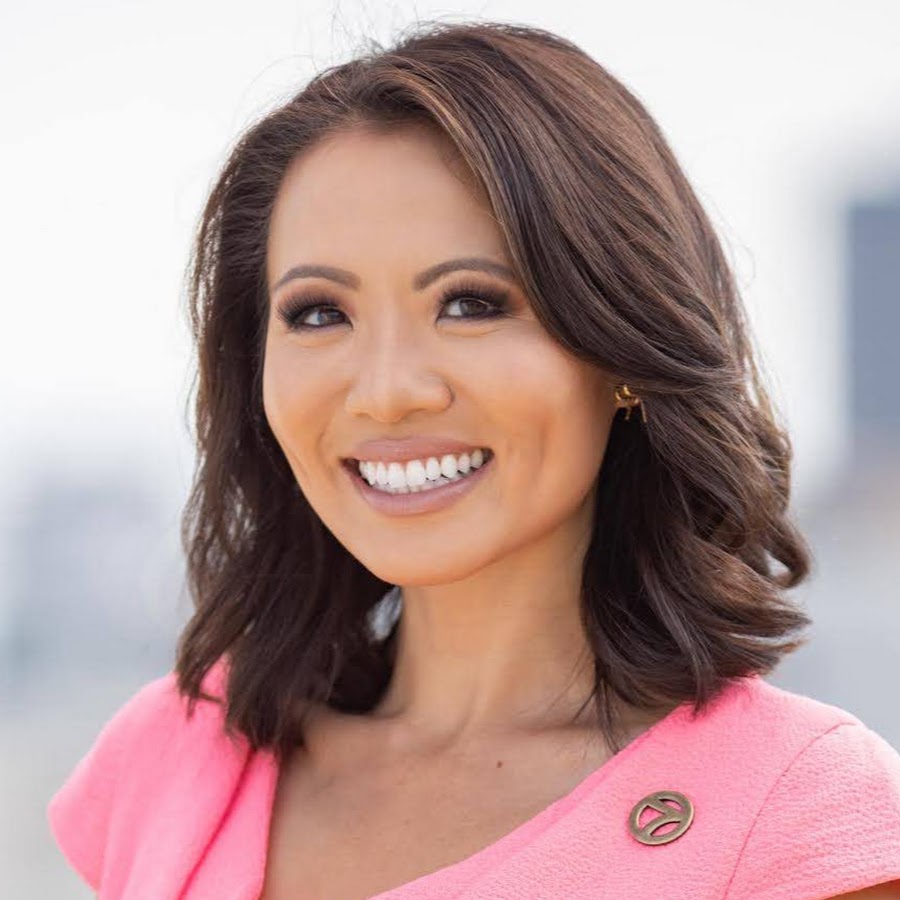
Dion Lim
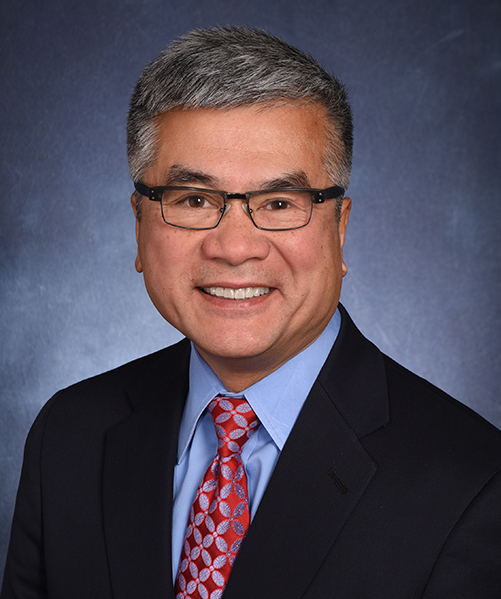
Gary Locke
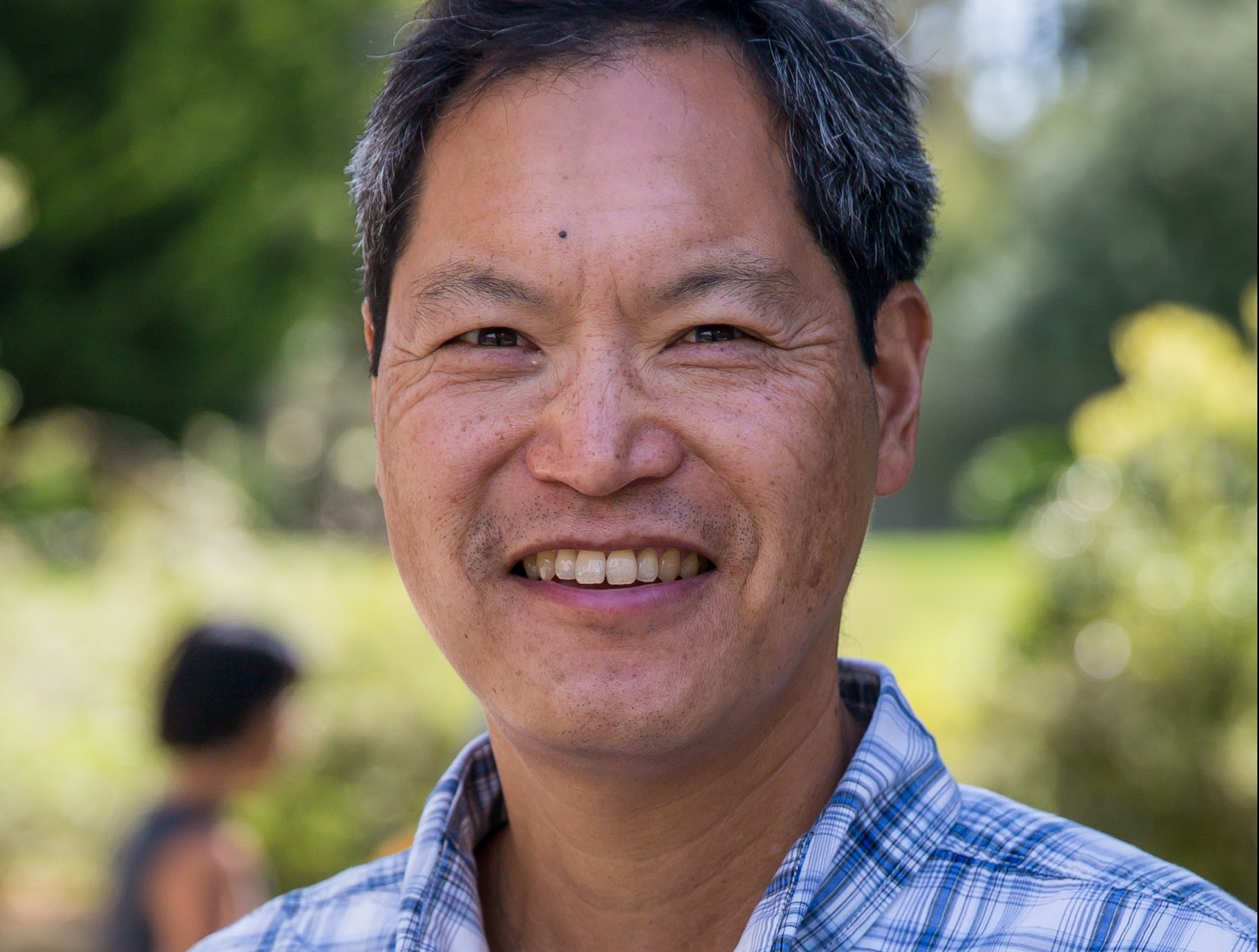
Dr. Russell Jeung
Amanda Nguyen
Recent Episodes
How Einstein GPT Brings Generative AI to CRM
Episode 12 | 03.07.2023
Sellers as Trusted Advisors and More Tips to Maximize Efficiency
Episode 11 | 03.01.2023
Opening the Doors of Opportunity for Black Male Youth
Episode 10 | 02.22.2023
How Salesforce Research Is Using AI to Generate Proteins
Episode 9 | 02.15.2023
CNBC Reporter and Author Julia Boorstin on What Women Leaders Teach Us
Episode 5 | 02.03.2023
Can Bringing Back the Woolly Mammoth Help Save the Planet?
Episode 4 | 01.25.2023