Reimagining Work: A Conversation with Slack's Stewart Butterfield and Salesforce's Bret Taylor
- 0.5
- 1
- 1.25
- 1.5
- 1.75
- 2
Michael Rivo: Welcome back to Blazing Trails. I'm Michael Rivo from Salesforce Studios. I'm joined again by my partner in podcast, Rachel Levin. Welcome back, Rachel.
Rachel Levin: Good to be here, Michael. I think it's time I changed things up a little bit and I want to put you in the hot seat.
Michael Rivo: Okay.
Rachel Levin: So tell us about who we're going to be hearing from today.
Michael Rivo: Well, today we have Stewart Butterfield, the CEO of Slack, and Brett Taylor, president and COO of Salesforce.
Rachel Levin: Whoa, pretty big heavy hitters.
Michael Rivo: Whoa is right. This is the conversation that we all want to hear, and we are excited to bring it to you today. So this was recorded as part of WIRED magazine's CES panel in January 2021, and moderated by Megan Greenwell who's the editor of WIRED. com. And it's an interesting conversation about the future of work in many ways and the new hybrid work models that are going to be coming that we're all going to be a part of. So some great perspective on that.
Rachel Levin: I remember when I first started using Slack in the newsroom years ago and you knew it was going to be this big thing because it became a verb. I slacked you, right? So it's incredible to see how that company has grown. I was reading that within the last year it went from 12 million people using Slack to over 20 million now. So that's pretty incredible and it shows you just how central messaging has become to all kinds of business and industry, not just in tech, right?
Michael Rivo: It's really how we're working today. And in the conversation, they talk about messaging being a central nervous system for businesses. So some really interesting ideas about messaging, about the future of work, the integration of Slack into Salesforce and what the future holds. So we are super excited to bring you this episode. So let's join the conversation. Again, recorded as part of WIRED magazine CES panel in January 2021. So let's join Stewart Butterfield, CEO of Slack, Brett Taylor, president and COO of Salesforce with WIRED. com editor, Megan Greenwell.
Megan Greenwell: Hello everyone, and welcome to WIRED HQ virtually at CES. I'm Megan Greenwell, the editor of WIRED. com and for today's event I'm really excited to have Brett Taylor, the president and COO of Salesforce and Stewart Butterfield, the CEO and co- founder of Slack. Today we'll be discussing the future of work and how to redefine our concept of the office. Before we kick things off, I want to let you all watching at home know that we encourage you to submit questions in the chat window starting now. And we will include as many of those questions as possible in the final 10 minutes or so of the event. And now I'd like to introduce our panelists. As president and COO of Salesforce, Brett Taylor leads the company's global product vision, as well as engineering, security, marketing and communications initiatives. Previously, he was a co- founder and the CEO of Quip, which Salesforce acquired in 2016. And before that, he served as the CTO of Facebook, where he saw the company through its IPO in 2012 and was credited with the invention of the like button. Brett joined Facebook in 2009 after they acquired his social networking company FriendFeed. He started his career at Google where he co- created Google Maps. Thanks for coming, Brett.
Brett Taylor: Thanks for having me, Megan.
Megan Greenwell: And Stewart Butterfield is the CEO and co- founder of Slack. In 2013, Stewart and his team launched Slack, which grew into the leading channel based messaging platform. In 2003, he co- founded Flicker. He's been named one of Time's 100 most influential people in the world. One of Business Week's top 50 leaders and in 2015 was named Technology Innovator of the Year by the Wall Street Journal magazine. Thanks for coming, Stewart.
Stewart Butterfield: Thank you.
Megan Greenwell: So I want to talk about several aspects of our changing work culture, but I thought I should start with the acquisition that brought you two together last month. On December 1st, nine months into a pandemic that had made Slack even more of a force in millions of workers lives, Salesforce acquired Slack for$ 28 billion in a deal that you Stewart called the most strategic combination in the history of software. I'll start with you, Brett, can you talk a little bit about your shared goals for the combined company to change the way we work?
Brett Taylor: It's become almost trite to talk about the impact of 2020 on the way we work, but I really can't overstate how significant it is. We have events like this going over Zoom. Retailers in the world have gone from brick and mortar to curbside pickup and direct consumer digital. Medical care for many of us is the first time we've experienced telehealth. And now every CEO I talk to her in the world, the big question is, of the habits that we've developed in this pandemic, what will we retain on the other side? And when I look at that, I think about flexible work. I think about employees who will take advantage of the fact that we've all learned how to effectively work from home to maybe have a more flexible work environment for themselves. I think about salespeople thinking, do I need to get on the airplane or can I communicate digitally with my customer? I think about customer service. I think about marketing, I think about e- commerce and just how much has permanently changed. And when I look at the future, I just think about how relevant Slack is to all of us, as colleagues, as customers, as consumers. I really think of it as kind of the operating system for the new way we work. And I think the combination of Slack plus all of the applications Salesforce makes for people in sales and customer service and marketing and commerce, it's an incredible opportunity to say, what does the company need to succeed in this all digital work anywhere world? So that's our vision and I'm really hopeful that we kind of accelerate what Slack started in transforming the way all of us work together.
Megan Greenwell: And Stewart, how would you characterize the pandemic's impact on the way we think of the workplace generally?
Stewart Butterfield: Well, so I can acknowledge that a lot of this is very much up in the air and we'll kind of see how it evolves, but I think many of the things that Brett touched on are really important. We kind of evolved the form of business we have today over the last maybe 100 years or so. Not because anyone designed it to be this way, but because this was just the way that things evolved. And I think it's really important for people to physically get together, at least sometimes, but almost certainly given the technology that has been developed since maybe the 1970s. We're over- reliant on that. The amount of business travel that I did before, even though I was probably only in the top half seems preposterous now, now we know that we're able to do this all from home. And it doesn't mean that I wouldn't wish that the pandemic would end and we can physically get together, I could go visit customers or they could come to visit us or I can spend time with my team. But we obviously had this capability before because companies like us were able to turn around in a week and just continue over the course of the year, quite productively. And almost every company was regardless of their industry unless they were directly affected by the pandemic. And if you asked most of their chief executives a week before that happened whether they would be able to, they would have been like me. I would have said, no, I don't think it's possible for us to just all start working from home the next week and maintain the same level of productivity. So sometimes things that seem impossible when they need to happen, you discover that you're able to do them. And I think with that discovery comes an era where rather than kind of random chaotic evolution of business practices, there's a little bit more intentionality and a little bit more design and a little bit more thoughtfulness about how we can best leverage technologies to work together.
Megan Greenwell: Brett, I'm curious, how much do you see what has changed over the past year as an acceleration of long- term trends? We were already moving in this direction anyway. Salesforce and Slack were already integral tools in our lives. And to what extent do you think something has fundamentally changed, that there's something fundamentally new going on as a result of the pandemic?
Brett Taylor: I think definitely a lot of 2020 has been about accelerating trends. It's not like we hadn't experienced e- commerce before this past Cyber Week, but when you look at the volume of e- commerce and the penetration, the number of people around the world who experienced e- commerce for the first time, it was a meaningful multi- year acceleration of that trend and we're not going back. I look at things like telehealth, another good example. We've been talking about that. And there was a number of both expectations, regulatory hurdles that 2020 sort of forced society to work through. And now that people have experienced the convenience of things like telehealth, we're not going back. And I look at the of consumer goods companies who perhaps had an initiative to go direct to consumer prior to the pandemic, but once digital was the only channel left, they accelerated that initiative. And I think it's permanently changed the business model of a lot of companies. So I do think that I view this, I think we'll look back at this year as accelerating the digitization of the economy. Accelerating the digitization of the workplace. And I think those are really meaningful trends. Stewart said something that I think is important, which is if you had asked me... I mean, we're Salesforce, right? We have Salesforce Tower. We're very oriented towards our real estate. If you had asked me if we could be successful digitally as a company, I probably would have laughed at you. And certainly with no preparation, it would've felt unachievable, but we did it. The thing I don't think anyone knows right now, though it's really fun to talk about, is once we are no longer required to be separated for health concerns, what is a new normal that we embrace as employees, as companies and what does that look like? It was interesting, in the middle of this pandemic we did a survey of our employees and the vast majority wanted to work remotely. We redid the same survey recently and 72% of our employees wanted to return to the workplace because of the fatigue of the pandemic. I think that's really interesting because it really shows you that I think the best companies will look about how do I intentionally develop my culture in this all digital work, anywhere world. And what does that flexible hybrid work model look like? I think that's the most interesting question facing every company right now.
Megan Greenwell: And Stewart, Slack is always regarded as a place that has a really strong company culture. All of us who are plugged in to what's going on and in Silicon Valley in San Francisco hear a lot about Slack culture and I'm curious how that's sustained, and what you guys have learned for the future when we're not separated anymore?
Stewart Butterfield: We've definitely been able to maintain it. And I guess there's still an open question for me and for many others, how much of that is reliant on the fact that we were together physically for so long prior to this? So I actually don't know the current number, but at least 25% of our employees today started post pandemic. So the 75%, the ones who started pre pandemic, they got flown out to San Francisco, whether they worked in Dublin or Tokyo or anywhere else. They spent a week with members of their team, that kind of onboarding. They attended events, small groups, large groups. And in that process of even just waiting for the elevator or hanging out in the lobby waiting for your ride, you formed these weak relationships. And I don't mean weak in a negative way at all, just in contrast to the strong ties you have with your manager or your direct reports or the people you work with most closely and how much work where those weak social ties doing in creating cultural cohesion. That's a question that we still have yet to answer. However, I think there's been a little bit of an inversion, whereas before, even though we sold Slack, probably looked at digital technologies as a way of augmenting the real way that you worked, which was together in a room with people. And I think that we're experiencing an inversion there. So the real way you work together is the digital way and now you can augment that with in- person meetings, again, of course, once the vaccine is more widespread and pandemic subsides. And I think that way of thinking, that your real headquarters is the digital headquarters as opposed to your real headquarters, being for us 500 Howard Street in San Francisco, that's a real paradigm shift. And I think a shift in the way people approach organizational design, company culture, productivity, all of those things. Maybe this is my hope and we'll see what happens, but my hope is that we can find the best of both worlds. That we can really take advantage of the technologies that are most helpful for us and where the physical presence is a big augmentation to either creating a culture or forming relationships, we're able to take advantage of that as well.
Megan Greenwell: I want to talk a little bit about the business travel question in particular. I also used to travel to San Francisco from my home in New York all the time to see my team and all of the tools we use pre- existed the pandemic. So it's not like we're doing anything new. I'm curious about how your teams, we'll start with you Stewart since you're already on screen, how they sort of coped with that and learned how to do things in new ways using existing tools.
Stewart Butterfield: Yeah. So I mean, the onboarding is maybe the best example. We have a really dedicated team and we've invested a lot in learning and development and new hire onboarding since the very beginning. And when you go back to like March 15th or something like that, after the offices had already been shut down and while we're still in this really uncertain period of trying to figure out how we were going to work, for some of our employees like maybe sales and marketing, there were some pretty big question marks about, are we still going to have events? Are we still going to do field marketing? Are we still going to have customer meetings? Are we're still going to have executive briefing centers? But I think a lot of that work was able to continue in a relatively natural way, at least temporarily because of course we did the customers remotely pre- pandemic and we did do virtual events and digital marketing. The ones that were really interesting were recruiting and that onboarding process because they were just so different. The thought of making hires without physically meeting them face- to- face and without that kind of almost ritual of them showing up to the office and meeting people and learning about the culture and how the company works, those ones seemed a lot more difficult. And those teams were able to really dive in, kind of take charge. While you can't constantly be paying attention to the mental level of how you do things to the same degree that you're paying attention to actually doing them, a really intense period there allowed the creation of a totally new way of onboarding. And I think that we were almost certainly in a world where we were able to physically get people together, be much more reliant on the digital means. It's just inertia. There's still plenty of places where you go to the office building and you literally take a pen and fill something out on a piece of paper. And then that thing gets scanned or maybe OCRed or maybe there's someone who has a data entry job, who copies information from this form into a database. Even today in the pandemic, there's still quite a bit of that. And of course, it's obviously better to digitize those things. In the same way, I think we don't look critically at the processes that we had before and which ones could have been improved dramatically through digital means. So I guess if there's an overall lesson from that, it's maybe we need to be a little bit more introspective or be a little bit more deliberate in assessing the ways in which we're working to try to find those efficiencies.
Megan Greenwell: That's great. And Brett, sales is firstly a very high touch field. So I'm curious what pain points you've found both within Salesforce and for your clients and how you've addressed them in the remote work world.
Brett Taylor: Yeah. It's a really interesting question. I think at the beginning of this pandemic because we were so unprepared for it like so many other companies, our sales team and then I think sales teams I spoke with around the world, there was a bit of paralysis. It was a bit like what Stewart was just talking about, the way things were done suddenly stopped. And so everyone had to collectively reinvent the way they work. And that was an incredible challenge. I really liked the way Stewart articulated it. The way I think about it is that the world collectively has now developed a beginner's mind about the way we do work. So much of what we did was because that's the way we did it before. And now that we've been forced to re- imagine the way we work, I think the opportunity is to say, okay, on the other side of this, how do we want to intentionally rebuild our culture when it's an option for us. The example you brought up of sales, I think is a great one. What we did here at Salesforce was we really had to do sort of a call to action at our company around what we call participation, which is just the way we work has fundamentally shifted. Everyone needs to be accountable for their customer's success, get on that phone, get on that Zoom and just make a call and ask how you can be helpful. We called it our pandemic operating model and we basically went around the company and said, don't have paralysis and just get on the phone and ask how you can be helpful. It turned into something we called the million Zoom challenge just to activate our entire employee base to just be engaged and be engaged with our customers as they were going through what I think was probably the most meaningful disruption any of us have experienced in our business lives, in our careers. And on the other side of that, I think it really sort of begs the question like Stewart was talking about with recruiting, which is now that we've developed this deep relationship with all of our customers digitally, what does it look like on the other side of this? And I think I will speak for Salesforce, but I think reflects what I'm hearing from our customer base, which is I think an appetite to not just snap back to the way things were. And there's a theme of really people doing it intentionally. I was just on the phone with an insurance company this morning that estimates, even on the other side of this pandemic, over 70% of this workforce will be distributed. And I think that's really representative of the customer conversations that I'm having.
Megan Greenwell: We've heard a lot this year about how people have a harder time disconnecting when their home is their office and their office is their home. I was up with insomnia at 4: 00 AM this morning and I started responding to a work email. I was like, what am I doing? This is crazy. Don't do this. So I'm curious how, you will start Stewart, how you sort of enforce boundaries and help your employees do the same?
Stewart Butterfield: It's a great question. And the answer is we're still figuring it out. And I think there's a couple other things that come into play. So your home is your work. For many people, your home is also your kids' school. And these physical spaces weren't necessarily designed to accommodate that. A lot of people chose where they live based on a bunch of criteria that in retrospect may not have been as important or maybe would have been displaced in importance by the stuff that you need today. All of this will change. And at some point the pandemic will subside and I think it will be a very different experience for a couple of reasons. So one is the amenities of normal life will be back. You can go get your nails done or you can sit at a cafe with your laptop and get some work done while watching people go by. All the things that were sources of satisfaction or variety. I also think there's a good reason people want to separate their work life and their home life, and going into the office was not just like a ritual that they enjoyed, but it kind of created that abdication. One thing we haven't really touched on is the market forces at play here. So the longer this goes on, the more likely it is that employees who are currently allowed to work remotely will decide, all right, well, I'm going to move further away from the city center and get a larger place because my kids can go outside. As that happens, you can't expect everyone to snap back. So I think there will be, enforced is the wrong word, but they'll be some constraints on the way in which we can design spaces. But one thing that I still think we'll see a lot of is the local co- working inaudible in a more distributed sense. So people still get to go see their colleagues or in some cases just other people who are working without necessarily going into one of our offices. There's a big question mark there, but it's having to create the discipline yourself that previously was enforced by the physical separation of spaces is hard. I mean, just like anything else, our willpower is limited. Like procrastination or sticking with your diet, getting enough exercise, eating healthy, spending more time reading rather than watching TV, whatever it is, we're pretty bad at doing things even when we want to and we know that they're better for us. So it's good that you caught yourself at 4: 00 AM, but I think you're probably still going to be catching yourself doing the same thing until there's some means by which we can supplement your will. There's something outside of your brain and in your house or your apartment that can help because I think as humans we kind of need that.
Megan Greenwell: I want to make sure we have enough time for all of our good audience questions. There are some really good ones rolling in. I'll start with this one from Harvey that I'll point to you, Brett. Can we expect a meaningful and longer term shift to remote/ digital for jobs beyond software, sales, IT, e. g. healthcare, legal services, et cetera? Do our apps and paradigms of work deeply understand other professions and will they be able to support any momentum toward remote work and collaboration in those industries as well?
Brett Taylor: Yeah. The short answer to that is I believe the answer is yes. In my job, I had the privilege of talking to so many companies in a wide variety of industries and certainly the traditional white collar office jobs, every single company I'm talking to from every single region of the world is contemplating more flexible work. I think the really interesting question is how that translates into the workforce plan for companies around the world. There's a great framework from Clayton Christensen called jobs to be done and I like to say, what are the jobs to be done if you've an office? One, is a location to do your work, but as Stewart alluded to, there's a lot of other things that are really important for an office. It creates moments of serendipity. It's a way for companies to imbue culture. It creates spaces for a really high bandwidth in- person collaboration. So I think going forward, I've heard a broad appetite for every type of job, in every type of industry. I mean, part, as Stewart sort of alluded to, driven by employees who now have experienced remote work. And I think every company I know of is having a conversation about, okay, what about flexible work? What does this mean for both our real estate strategy and our workforce plan? And I think the big question that we've talked about a bunch in this conversation though is, what is the role of the office in that environment and how do we make sure we don't lose our culture in that process? I think that's different in different job types. I think it's different, different industries, but I firmly believe it will be a trend in every single industry in the world.
Megan Greenwell: I have a question here about Zoom. Stewart, I'll point this one at you. Despite people becoming more comfortable on video meetings, I think there's definitely some Zoom burnout, but still a desire to see who we're talking to. Is there some sort of in- between?
Stewart Butterfield: Yeah, it's a great question and something that we've been spending a lot of time on. I think we realized when we're trying to figure out how to make this work better for ourselves, for our employees and for our customers was, are there processes that today must be synchronous that we could make asynchronous. And the biggest use of time that requires that synchronicity is meetings. If the meeting is 11:00 to 12: 00 on a Tuesday, you have some people calling in from time zone X and some people from Y, it really requires everyone to stop what they're doing, base all their day around this. So that's not a time that they can give their kids the school lessons or take care of parents or run errands or get exercise or any of those things. Everyone must be focused on this event for the full hour or 30 minutes or whatever. And of course, those of you who've attended meetings know that you're not always needed. I think there are a lot of meetings that are important, that they're synchronous. Some percentage, I don't know, 10%, 25%, maybe as much as 50%, might be better asynchronously. And when I say that, some of the stuff we're working on, I guess more directly a lot like Instagram stories. So a lot of the meetings that are more or less check- ins than around the table updates or people reporting on the progress, there's no reason why we have to do those all at the same time. There might be some efficiencies in doing that, but there's some big inefficiencies in requiring that everyone to do that. I think an amenity or a perk of inaudible employees these days is a little bit more flexibility. Rather than have your whole day of eight hours where your every minute is like, you have to be doing this task then, giving people a couple of hours back so that they can work early in the morning or late evening, or they can do other things during the day, make a big difference. So you imagine like a Slack message, a meeting object that has people's updates and then you can attach documents. You can attach the presentation. And instead of that meeting happening from 11:00 to 12:00 on the Tuesday, it happens from 11:00 on Tuesday till 11: 00 on Thursday or something like that. This is really spread out over time and people are able to participate to the degree that it's important for them to do so. And they get to pay the right amount of attention and they get that flexibility. So that's something that personally I'm looking forward to. Well, Zoom is a great partner, we're a customer of Zoom, love the product. I don't have anything bad to say about Zoom. I am unhappy with the amount of time that I have to spend on camera. We're all watching people, all synchronously.
Megan Greenwell: Brett, I really like this question that's historical looking as well as forward- looking. This person says, where work from home policies perhaps too conservative in the past, too driven by norms that had worked for the status quo rather than for more inclusive workplaces and for workers who sought to create a more balanced home life? How, if at all, will any of that change permanently post COVID?
Brett Taylor: It's a great question and I think a lot of subtlety in this. I would argue that the atomic unit of work is not the individual, but the team. And I think that part of the reason distributed work is working right now is because we're all distributed. So we're all on equal footing. There's one camera per participant in the meeting. Communication is all digital. If any of you have been the remote participant in the meeting where everyone else is in a conference room, you know how excluded you feel, right? You know how hard it is to hear, how hard it is to inaudible in. And I think that's why probably inaudible to conservative around remote work before based on a belief about, does distributed remote work, work. I think obviously it's been proven in this pandemic. On the other hand, I do think that to do distributed work well, you really have to be intentional about how you organize the way you work. And in particular, how you organize around teams rather than simply organizing around individuals. Put another way, if every individual on a team has a different perspective about the way to work with each other, it doesn't work. And I think that's something that really drew us at Salesforce to Slack in particular, it was really oriented around teams. There's a phrase that Slack uses in the marketing which, this is your digital HQ. And I love that concept because it's not saying this is a way for me as an individual to work in a remote way. It's saying here's a technology that enables distributed teams to be effective. And when I look across our portfolio at Salesforce, whether it's people saying, how do we make a contact center that's not a building, but something that exists digital? How do I have a selling team that's selling into a large patch of customers where most of those interactions are digital and the team is distributed. When I look at teams in marketing or e- com department running Cyber Week in a distributed way, those are really I think the right ways to think about designing tools and policies around distributed work. Making sure you're focused on the outcomes of teams and not necessarily just the needs of individuals
Megan Greenwell: And Stewart, you talked a little bit about how much of the Slack team was hired during the pandemic. We have a good question of that from Judy. She says, how do you see recruiting shifting to hire for excellence allow for virtual work? Will that affect your focus on diversity hiring in light of the focus on the need for a more diverse workforce?
Stewart Butterfield: It's an interesting question I think because one of the barriers to diversity, I think historically has been geography. The San Francisco Metro Bay Area and San Francisco itself are not at all representative of the demographic makeup of the overall country. So if companies that are San Francisco based are equally able to hire in Chicago or Atlanta or Minneapolis as they are in San Francisco, I think it opens up a whole bunch of new possibilities and that should really raise the bar. I mean, there's never been a conflict in my mind between hiring for quality and hiring for diversity. And I think this makes both a lot easier, frankly. The other kind of benefit I hope to see long term as maybe a little bit of a knock on is, if these big Bay Area based tech companies are hiring in a lot of communities that they weren't previously hiring, that's not just going to have an impact on the individuals who are hired, but that creates a network. And that brings people's family and friends in, introduces people to business partners. I think it creates a much greater possibility that new businesses are able to flourish in places outside of the Bay Area. And of course they always were, but so much of the opportunity and so much of the wealth creation has happened in the Bay Area over the last 15 or 20 years. And spreading that out I think it's going to have a great impact both on the Bay Area based companies and the creation of the next generation across the country.
Megan Greenwell: Well, thank you. I'm afraid that's all we have time for today. There were some wonderful questions. I want to thank Brett and Stewart for a great conversation, and their really valuable insights. And I want to thank everybody at home for joining us today.
Michael Rivo: That was Stewart Butterfield, CEO of Slack and Brett Taylor, president and COO of Salesforce in conversation at WIRED magazine's CES panel in January 2021. For insights into this topic and others, head over to salesforce. com/ blog for resources to help guide you through today's changing economic and social environments. I'm Michael Rivo from Salesforce studios. Thanks for listening.
DESCRIPTION
In a matter of months, everything we knew about working and operating a business was flipped on its head. And with that almost overnight transformation have come new challenges for employees and employers alike.
In this episode, you’ll hear from Bret Taylor, the president and COO of Salesforce, and Stewart Butterfield, the CEO and co-founder of Slack. Bret and Stewart Bret speak with Megan Greenwell, the editor of Wired.com, and explain why the overnight reinvention of work will have a positive impact in the long run, plus they share their perspective on work-related trends they believe are here to stay.
Today's Host
Michael Rivo
Today's Guests
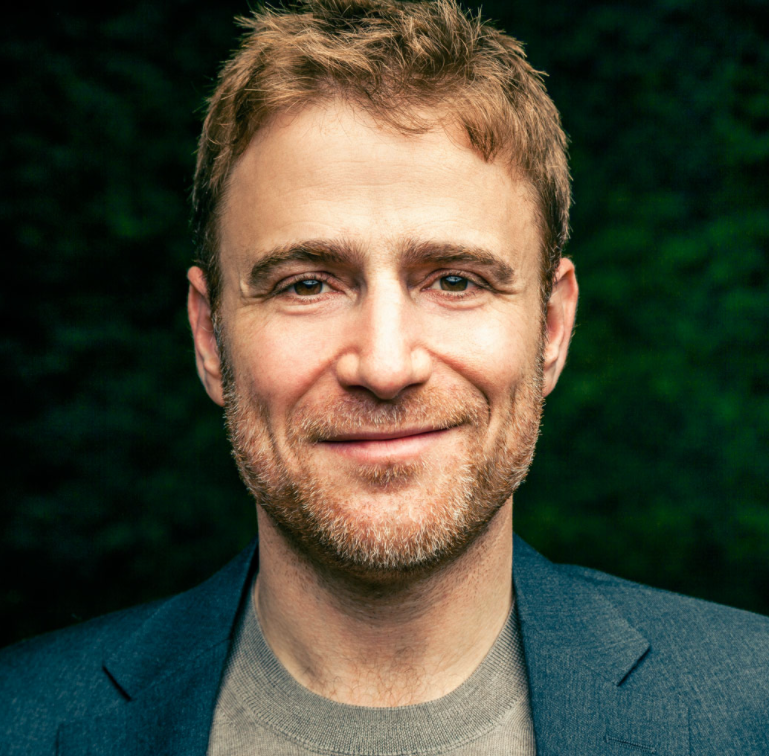
Stewart Butterfield
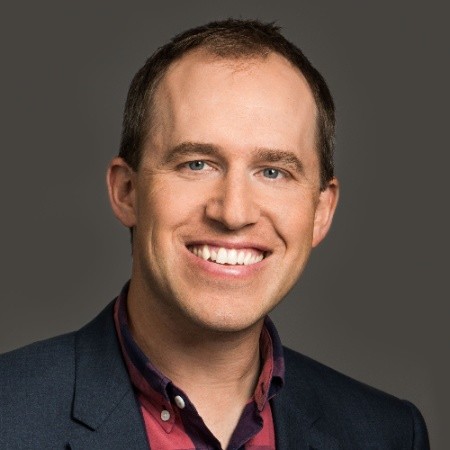
Bret Taylor
Recent Episodes
How Einstein GPT Brings Generative AI to CRM
Episode 12 | 03.07.2023
Sellers as Trusted Advisors and More Tips to Maximize Efficiency
Episode 11 | 03.01.2023
Opening the Doors of Opportunity for Black Male Youth
Episode 10 | 02.22.2023
How Salesforce Research Is Using AI to Generate Proteins
Episode 9 | 02.15.2023
CNBC Reporter and Author Julia Boorstin on What Women Leaders Teach Us
Episode 5 | 02.03.2023
Can Bringing Back the Woolly Mammoth Help Save the Planet?
Episode 4 | 01.25.2023