Committing to a Net Zero Future: A Conversation with Marc Benioff and Julie Sweet
- 0.5
- 1
- 1.25
- 1.5
- 1.75
- 2
Michael Rivo: Welcome back to Blazing Trails. I'm Michael Rivo from Salesforce Studios. I'm here with Rachel Levin. We are the team that brings you Blazing Trails. Hi, Rachel.
Rachel Levin: Hey, Michael. Good to be back.
Michael Rivo: Very good. Well, we've got a great episode today. Who's joining us?
Rachel Levin: Well, today, we've got our CEO, Marc Benioff, and Accenture CEO, Julie Sweet. Tell me about the episode, Michael.
Michael Rivo: Well, Marc and Julie talk about the work that Salesforce and Accenture are doing on work. com to help all of us get back to work. Well, we are working, but get back to work in the new normal. We're all trying to figure out at the same time. It's great to hear Marc and Julie talk about what the two companies are doing. Some great information about the power of design and of these new tools that are being built helping to remove the friction from the way that we're going to be getting back to work and opportunities around different ways to think about running companies during this pandemic and creating new experiences for onboarding and better employee experiences. Lots of interesting stuff.
Rachel Levin: Yeah, and I really liked when they spoke about mental wellness and how that's not something that is an extra that companies will offer, but it's really now built into how companies are going to have to deal with employees and really get the best out of people in these super trying times.
Michael Rivo: Absolutely. Salesforce has some great resources on well- being, in particular, our Be Well Together program. If you go over to sfdc. co/ wellbeing, that's sfdc. co/ wellbeing, you can download our Wellness Playbook that was created in partnership with Thrive Global and tune into some great sessions with Deepak Chopra, Megan Rapinoe, Ariana Huffington, and more. Of course, check out work. com. These are our purpose- built apps, expert advice, and training that you need to build trust and stay resilient as a company in this time. Let's get into the conversation now and join Salesforce CEO, Marc Benioff, and Accenture CEO, Julie Sweet.
Marc Benioff: All right, well, thank you so much for joining us today. Julie Sweet, welcome to Leading Through Change. Once again, we're thrilled to have you here.
Julie Sweet: Yeah, great to be here. Thanks for having me, Marc.
Marc Benioff: Well, I'm so excited and you've been such an inspiring figure through this global pandemic over the last year, helping us to know where we're going and how to prepare for the best, to really appreciate everything that you and your company have done, and wow, it's been a big year for you, too, hasn't it?
Julie Sweet: I think it's been a big year for all of us. It's great, the same thing, Marc, to see what you've been doing, whether it's leading on PPE or leading on vaccines and helping people get back to work. I think this year has been a year of companies really stepping up and what you guys have been doing at Salesforce is really fantastic.
Marc Benioff: Well, I think if you asked me a year ago what PPE was, I didn't know. To think about that we've bought almost 60 million pieces of PP and distributed over 300 hospitals is beyond my imagination, and then the bridging of that work into work that we've done together with contact- tracing, where we established contact- tracing systems all over the world. That's been a huge success, especially entire regions of the world have been able to eradicate the virus using contact-tracing. Julie, I just want to congratulate you on that fantastic work you've done.
Julie Sweet: Well, thanks. We did it together. It's one of the examples, a lot of times people are saying," Well, in this new world where we work remotely, in that, can you still innovate?" It's one of the examples that I point to because we innovated together to create that solution and now we're doing the same thing with vaccine and also in sustainability, and it's really, for me, innovation comes down to being willing to work with others, to be learners, and really having that strong sense of purpose.
Marc Benioff: Well, you're very kind. I'll tell you, this vaccine rollout all over the world. I mean, this is really amazing. Of course, I think the vaccine is critical to bring in the pandemic under control, but we also see a lot of people in the world who don't want to take the vaccine. I respect that as well, the anti- vaxxer community. That said, we still need the information technology and logistics for those who do want to get the vaccine, because there's no question, at least from the point of view of the epidemiologist, this vaccine is critical to bring in a close to this pandemic.
Julie Sweet: Absolutely. It's one of these basic things that we have to do, right? First, it was being able to do the contract- tracing in anticipation of being able to have the vaccine, and then, of course, actually getting back to work. One of the things I really want to thank you on behalf of our 500, 000 people at Accenture is the work we did with you on work. com to put people back to work, including Accenture, and so we rolled out work. com, so that first, that we could have end- to- end case management, we're going to be doing the vaccine management, but it's really enabled our people to have a seamless and frictionless experience at a time when, frankly, people are fatigued and there's a level of fear. It's not just about functionality, but also about people feeling cared for when they have something that is frictionless that's very well- designed, and that was, again, us coming together with great technology, a great understanding of people and process. It's another way that we're really proud that we've contributed together and it's something I hear a lot about from our people.
Marc Benioff: Well, it has been an unbelievable year and it's an exhausting year. Let's get serious. I'm in my home, you're in your home, and for so many of our clients, they're in their homes as well. This is my first pandemic. I didn't realize a year ago that I'd still be sitting here and waiting to be vaccinated, waiting for the pandemic to close, waiting to be able to get back to work, waiting to reopen all of our businesses, and we still don't have a date in mind where we know all that is going to happen. That's been my biggest surprise. How about you?
Julie Sweet: Absolutely. I remember thinking we just kept moving the goalpost. In September, we said," We have to stop doing that and we just have to turn the page," and called it our new reality is one where we don't have an end date, there isn't something about going backwards. I think that's an opportunity as we think about leading through this change to actually see opportunity in that, so for example, we had to quickly pivot to hiring and onboarding completely virtually, so since March, we hired 60, 000 people. Well, at first, we just digitized what we would have done in person, but now we've created new experiences and better connections with teams than we had when we were bringing people to the office and there's only a certain amount of interaction that could be. It's just a small example about how we're trying to think differently about this new reality and even how can we actually make better experiences from the learnings that we have now.
Marc Benioff: Well, I think that that is really what's happening. I mean, we're learning so much. I mean, I can't believe how much I've actually learned about the world in the last year. It's amazing to me. We're in a situation right now where, I think, hopefully, the scenario is that we have this pandemic, it's still very much going on all over the world. I just talked to some of our executives in the UK. They're locked in their homes. It's quite a serious situation there. The numbers are just extraordinary what's happening in there. We hope that the scenario is that we're able to give everyone the vaccine, one of them that has been created in the UK, and the virus subsides and they all get back to work and get back to school. You can see that in Israel, where they're taking that very aggressively, where a third of the country has already been vaccinated. That's what we want. We want to get back to work and get all the kids back to school. I mean, this has been an unbelievable year. We're going through an economic crisis. We've gone through a racial justice crisis. We've been going through an environmental crisis. We're going through this economic crisis. We're going through an education crisis with these schools and getting these kids educated. I mean, this is beyond my imagination of what anyone would have to deal with, and even a political crisis, very much so, in the United States, as we've seen in the last several weeks. When you look at all of that together, it's like, wow, we've got to just take these one at a time and bring them under control. I hope that the number one is the pandemic. But the second scenario is that more of these types of mutations to the virus emerge and they escape the vaccine, and this is the scenario none of us want, and that this continues. Maybe they get linked together in a way that we're just in a new pandemic world and this is our new reality and that's the second scenario and that's the scenario none of us want. We don't want to be in a pandemic world. We want to be back into the world that we had, and of course, we're grateful all the time, but we want to be able to do so much.
Julie Sweet: I agree. I mean, but that is why we've been thinking about this new reality, because I think there's also such a letdown when you keep trying to think you're going to get to the right point. I'm curious as to how you've been thinking about mental wellness, because I just had my leadership team together and we were talking about our priorities and one of the ones that I said to my leadership team is" We need to commit to wellness." Prior to the crisis, we were working with Arianna Huffington and Thrive Global and had created a program about mental wellness, which we were just rolling out, and when the COVID hit, we changed it up quickly because we knew that people wouldn't be able to invest as much time. We've had 140, 000 people out of our 500,000 go through it, which is great on the one hand, because it was a service that they really needed. Nine out of 10 have said it's helped them. But it's also a sign, right, of people really needing it. I think as we continue to move through, we're spending a lot of time as a leadership team thinking," What does it mean to commit to wellness?" Well, personally, as a leader and for our people, and I know that you also think a lot about this, I'd love to hear what you're thinking in this area.
Marc Benioff: Well, I so strongly agree. Right from the beginning, I realized that mental wellness was going to be an issue for me personally, for all my employees and my customers, my partners, because when you are going through a situation like a global pandemic and when so much is changing, you're going to go through unbelievable amounts of stress and it's just not what we're set up to be. We were not set up to just ride easily through a global pandemic as if we're just watching a comedy. This is a very serious situation and it's a horrible situation and it's a stressful situation and so everyone needs to learn new techniques and new capabilities. I know just for myself, I've had to double down on my meditation practice. I've had to double down on the amount of exercise that I'm getting. When that's not working, I need to talk to a family member, a friend, or a professional counselor so that I can get my own help. I think platforms like Thrive or the things that we've been doing at Salesforce and posting on YouTube, which is our wellness program called Be Well Together, which features these experts from all over the world on how to survive and succeed, and through a pandemic, this is really important, but this is tough. A lot of CEOs, like me and you, we want to talk about being invincible, about never having these challenges. The reality is all of us have these challenges, every employee, all of our family members. We have to keep an eye on everybody. This is a very difficult situation. In fact, one- third of all of our employees have self- reported even in the first quarter of the pandemic that they were experiencing mental health challenges.
Julie Sweet: Well, it's great what you're doing with your Be Well program. I think, again, this will hopefully be one of those silver linings, right, because this'll be hopefully an enduring focus for our companies and an enduring awareness, which is trying to something good out of a bad situation, but that's one of the ways we're thinking about it.
Marc Benioff: Julie, one of the things I'm so excited about and part of your leadership and vision for Accenture is the idea that Accenture is going to be a leader in sustainability. This is so important to me because we've seen so many changes in the world just in the last year with weather patterns, with deforestation, with these horrible California wildfires that have been happening here at my home. Give us your vision for sustainability. How will Accenture helped to lead the world, other companies, other CEOs like me and you to create a more sustainable world?
Julie Sweet: Well, thanks, Marc. I feel like this has been a journey we've been on together because I've been going to the World Economic Forum, I think, maybe six or seven years now, and every year without fail, you're a big event there and you focus part of the event on sustainability. You were an early voice and it's definitely made an impact on me. When I became CEO 18 months ago, one of my commitments, and by the way, a commitment also to my children because I have two girls who are 12 and 14 who are every day reminding me that my generation destroyed the planet and that we have to do something about it. I really made the commitment that not only would Accenture continue to raise its game, we've been known as a leader, but we needed to do more, and so we announced this in October that we will be, by 2025, have net- zero emissions. We will use a hundred percent renewable energy in our facilities around the world, up from only 26% last year, and then also focus on water, which is an important area that probably doesn't get enough conversation, but that in addition to operating ourselves, we work with the world's leading companies and they look to us to help create solutions so that they themselves can meet their goals. We said," We want to embed responsible business by design with sustainability as being one of the first focus areas," and that to do that most effectively, we should be doing that also with our partners like Salesforce. I'm really excited about the work that we're doing together because it is about bringing technology, the knowledge of companies, and then helping them accelerate their own journey to being a more sustainable client, and therefore, also being able to bring more sustainable products and services to their own customers.
Marc Benioff: Well, that's so powerful. We all know that you're working so strongly to help companies be more trusted, to have a more digital growth and to be more digital, and to answer the digital imperative. We know that you're working with them to create more customer success and customer- based systems, but this idea that you're also focused on helping companies become more sustainable, this is very exciting, because I think every organization needs support in these areas that you just went through, whether it's net- zero or whether it's zero waste or reducing water, this is absolutely critical. These are not core competencies a lot of companies have. What's the biggest challenge in making that happen?
Julie Sweet: Yeah, to your point, it's not the core competency of a lot of companies, right? I think as I talk to CEOs, one of the other challenges has been actually connecting the dots within the organization. A lot of times, sustainability has been off to the side, it's part of corporate responsibility, or it's in a portion of the organization, and actually, to become more sustainable as a company, you have to have different operating models, you have to have a mindset that's different, and that's why this idea that we have with responsible business by design and doing it by design means that you actually have to have the leadership mindset as well. The approach that we're taking is approach that is really holistic that we're now going to do to expand our work together with combining our services, your Sustainability Cloud, and Salesforce Customer 360, because for the first time, we're actually going to bring sustainability to the front office, to the customer engagement, provide that insight that companies need as a part of their business, not as a sideline, but really embedded in their business. That's something that together we can do so much better than apart and we can do it faster. It's not just a nice to have. When you think about sustainability and why businesses, it's about performance, people, and purpose. Sometimes people will focus only on the purpose, but our research shows that when you put technology and sustainability together, companies perform two- and- a- half times better in large part because their customers, their consumers really want it as well. It also matters for talent. Our latest research says that one out of every two employees wants to work and believes that after the pandemic, it will matter more whether their company has sustainable practices, is focused on inclusion and diversity and re- skilling, so these are the kinds of things that really matter to attract the best talent, and of course, we need to do it for the future of the planet.
Marc Benioff: While you were going through so many things, I was making a note to myself. I mean, trust, growth, customer success, innovation, equality, diversity, inclusion, sustainability, and work from home and the work- from- home imperatives and surviving and succeeding through this pandemic. I mean, how do we prioritize? What is most important thing when we're looking at these things? We can't do it all, so what do we do first?
Julie Sweet: Yeah, it's a great question. I mean, it's interesting because post- COVID, what we're seeing is compressed transformation, right? That question, I think, means something different post- COVID than pre- COVID because what we are seeing is companies needing because of the change in their consumers, the change in their markets, the disruption to their business, to have to change more. To give you some example, back in May, when we asked companies, whether they were investing in digital transformation, about 56% said yes, right? Just a few months later, it was 80%. As you think about how to prioritize, the point is to invest and rebuild and re- imagine with these things at the table, and so if you prioritize what's your business area, and then you use the lens, as I think about rebuilding, how do I think about sustainability as a part of the lens? Rather than trying to pick, is it sustainability versus inclusion and diversity, it's about taking the priorities of your business and then embedding these things around inclusion, diversity, re- skilling, and sustainability into that strategic priority. I think that is a huge shift for many companies that we're helping with.
Marc Benioff: What you're saying is we need to integrate these values into every initiative that we're doing, is that right?
Julie Sweet: Absolutely. Then what you do is you prioritize the business initiatives, but you do so with these things embedded, and so when we develop our assets and our offerings and we work with partners like you, it is part of the lens of everything we do now. That was a shift for us, right, because it's not on the side, it's about how we do business and how we serve our clients.
Marc Benioff: Well, Julie, thank you so much for being with us on Leading Through Change. It's always a pleasure to be with you and thank you for your tremendous leadership and congratulations on your incredible work as the CEO of Accenture. We're so grateful. Thank you.
Julie Sweet: Thanks, Marc. As always, it's great to catch up.
Marc Benioff: Bye- bye.
Michael Rivo: That was Marc Benioff and Julie Sweet from our Leading Through Change series. For insights into this topic and others, head over to salesforce. com/ blog for resources to help guide you through today's changing economic and social environments. I'm Michael Rivo from Salesforce Studios. Thanks for listening.
DESCRIPTION
Whether distributing PPE, helping with vaccine rollouts or making a push toward a more sustainable future, Accenture is innovating to drive positive change and impact.
On today’s episode, Salesforce founder and CEO Marc Benioff sits down with Julie Sweet, the CEO of Accenture, to discuss what it takes to get these kinds of initiatives off the ground and the leadership needed to bring about holistic changes when huge obstacles stand in your way. The two discuss how to prioritize when facing multiple challenges all at the same time, and they dig into the power of partnerships and teamwork in bringing about lasting change that goes beyond just your own front office.
Today's Host
Michael Rivo
Today's Guests
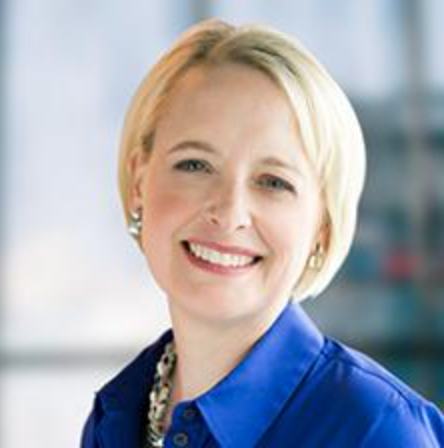
Julia Sweet
Recent Episodes
How Einstein GPT Brings Generative AI to CRM
Episode 12 | 03.07.2023
Sellers as Trusted Advisors and More Tips to Maximize Efficiency
Episode 11 | 03.01.2023
Opening the Doors of Opportunity for Black Male Youth
Episode 10 | 02.22.2023
How Salesforce Research Is Using AI to Generate Proteins
Episode 9 | 02.15.2023
CNBC Reporter and Author Julia Boorstin on What Women Leaders Teach Us
Episode 5 | 02.03.2023
Can Bringing Back the Woolly Mammoth Help Save the Planet?
Episode 4 | 01.25.2023