
What is Happiness? A Conversation with Derren Brown, Mentalist, Illusionist and Best-selling Author of ‘Happy’

- 0.5
- 1
- 1.25
- 1.5
- 1.75
- 2
Michael Rivo: Welcome back to Blazing Trails. I'm Michael Rivo from Salesforce Studios. I'm joined today by Vicky Nisbet, AVP, comms and media in the UK for Salesforce. Welcome to the show, Vicky.
Vicky Nisbet: Hey, Michael. Good to be here.
Michael Rivo: Well, today, we're hearing from your conversation with Derren Brown, the mentalist or illusionist and best- selling author of Happy. Tell us a little bit more about this conversation.
Vicky Nisbet: Well, it was absolutely fabulous, the whole experience. The guy's really incredible. I've been watching him for years on UK TV and have been very interested in his magic, but having the opportunity to really look into his book and see his opinions on other things really brought it to life for me, exactly the depth that he goes to. And he's got a really good view on things.
Michael Rivo: I think it is so interesting that he comes from a very different place to write a book like Happy. I'm not sure, did you talk about the journey of how he ended up writing the book or how he got there?
Vicky Nisbet: Yeah, it's interesting really, because his interest has always been on the mind and a lot of the magic that he does and the tricks that he does around manipulating the human mind. So really, I suppose Happy is around control and how to identify various things within your mind. So, first off was the idea that happiness is a journey, not a destination, I found that absolutely fascinating. Everybody talks about, "Oh, I need to be happy. What can I do to be happy?" But actually, if we focus too much on getting there, we miss the journey, we miss the experience that takes us on the way, and it really made me stop and think about that. And even to some extent, adjust some of the things I think about what I do and how I live my life, because we need to take time to stop and smell the roses, particularly in difficult times like now.
Michael Rivo: How are you bringing some of this back to your work? And tell me how your working right now? How is it different from how it used to?
Vicky Nisbet: Well, I think the strongest message for me out of the book, and I realized actually that I do this quite a lot naturally, was the lessons from the Stoics around being able to identify elements in your life that you have within your control, which is namely what you think, and how you act, and separating that away from everything else that you can't control. Which really brings to mind that you stop wasting energy trying to change things that are beyond your control and you focus on the way you react. And I've already had a meeting with my team in the UK where I've used this and quotes of this as a way for them to start the new year because we're on a pandemic, we're unable to change any of that, but what we can do is approach it with a different attitude and look at the things that are within our control to make these things better, because we all have to move forward, we all have to do our job, deliver our number, see our customers speak to people. So what can we do to make that easier for us? And it's about being comfortable with those things that are beyond our control.
Michael Rivo: Wonderful. And then, is there anything that stands out that folks may want to keep tuning in to listen to, a key takeaway or anything that you want to highlight?
Vicky Nisbet: I would say, listen to the podcast, absolutely, because if there's any time that you need lessons on how to get a little bit of happiness, it's right now. And his book and this conversation really does shed some light on how we can make the day to day much easier.
Michael Rivo: Well, wonderful. I'm excited to listen to the interview. So let's hear your conversation with Derren Brown.
Vicky Nisbet: My guest today is illusionist and mentalist, Derren Brown. Derren has been manipulating the human mind on UK TV for the past 20 years. During that time, he's hypnotized a man to assassinate Stephen Fry, he stuck viewers at home to their sofas, and successfully predicted the national lottery. He achieved a first in the history of magic by selling out eight one- man shows, and he's written several best- selling books, including Happy: Why More Or Less Everything is Absolutely Fine. In his spare time, if he has any, Derren paints remarkable portraits and is a keen photographer. So welcome, Derren.
Derren Brown: Wow, that was lovely. Thank you very much.
Vicky Nisbet: It's quite the accolade you've got going on there.
Derren Brown: Quite an introduction. Yes. It's quite a busy career. Actually, one of the nice things, I think, for me, what I do is, I've never quite managed to put a label on it, which has allowed me to do lots of different things, but yeah, it's quite nice hearing all rattle off like that, thank you.
Vicky Nisbet: Absolutely. There's no putting you in a box, is there? Perhaps rather surprisingly, you studied law at uni or reluctantly started it, should I say?
Derren Brown: Yeah, that's right. I did law and German in Bristol and graduated in'94.
Vicky Nisbet: That's quite the choice.
Derren Brown: Quite a choice, yeah. Well, I realized very early on I didn't want to be a lawyer or a German, but by the end of my first year, I'd started doing hypnosis and doing shows and things for students and hypnotizing people just in my spare time. And that took over really, so I continued with the course, but I had no interest in doing anything really beyond that with it.
Vicky Nisbet: And where did the interest in the mind in hypnosis come from?
Derren Brown: I saw a hypnotist in my first year, a guy called Martin Taylor, who was performing at the students union. And since then, I realized most hypnosis shows are pretty tacky affairs, and this wasn't, actually, it was very funny and very entertaining, managed to strike that note where you're not really laughing at anyone, you're just laughing out of a kind of amazement at the situations that are developing. I remember he told someone that they'd forgotten the number seven, for example, and there's nothing embarrassing about that. But when you watch somebody struggle to, they're five fingers of one hand five fingers on the other hand they know that five at five is 10, but when they count through their fingers, they keep getting to 11 because they're skipping seven. And when you watch that sort of thing play out when you're watching genuine bafflement, it was jaw- dropping and needed a lots of things like that, and have a time for questions afterwards. And I just came home that night and thought, " Well, I'm going to learn how to do this." I think it ticked a lot of boxes that I didn't quite know I had as well in terms of wanting to perform and also the control aspect of it, I think probably was appealing at that age as well. I think it was giving me a lot, so I just dedicated myself to learning it.
Vicky Nisbet: And that was the mind thing? Because I did law at university as well, and I was wondering, because I know you have to learn 200 cases before every exam. I was thinking maybe that's where the memory thing came from. How did you tie together all those points of law with cases?
Derren Brown: It did. It did actually. Well, actually, I got into that stuff beforehand, I suppose, with my A Levels. And I remember my approach to learning whatever history and those syllabi was to reduce and reduce and reduce. I'd work out a series of bullet points and then each one of those bullet points would have an initial, would be reduced to a single letter that would reflect that point. There were six of those points so six initial, six letters, I'd make a word or an idea from those letters. And then I ended up with a bunch of those words or ideas. So I then reduced those to like, that was a series of bullet points. And I'd do the same again and the same again, and I'd keep reducing, to where in the end I would just have one word or strange image that could explode out into an entire syllabus. Of course it meant nothing to me, this is for subjects that I didn't find that interesting, but it was just a way of learning vast amounts of information. I found the same with law, as you'll probably feel the same as me. One of the strange things about learning law is that unlike pretty much any other subject, even if you don't go into a career, that you can at least retain and usefully have some bits of information bouncing around in your head relating to, I don't know, geology or philosophy or whatever it is you do. But with law, A, you forget most of it because it's so dry. And then the bits you do remember, you can never advise anybody on those things or even try and be helpful because the laws probably changed in the meantime, so it could be really counterproductive. So it was a utter waste of time apart from a kind of analytical mindset that it taught me. But I do remember using these same memory techniques and so on a lot with learning law. You've got a case name, and then you've got what the case meant and what it was about, and then you've got the year. Those are the three bits of information that you want to remember. So I was playing around with fun ways of doing that.
Vicky Nisbet: I should have known you then for sure.
Derren Brown: Yeah. Well, but I was never in the library, I was never one of those people that was spotting where in the library. It was interesting to me that after I graduated and thinking back and seeing people's results come in, actually, the people that were in the library swatting away all the time tended to not do so well. And I think perhaps a lot of it has just to do with that, it's just less efficient memorization.
Vicky Nisbet: Yeah. And do you remember any of them now? That's the question.
Derren Brown: Not so much now, because the trouble with those sorts of techniques, you do have to review them, you have to run back through them. So no, not really. As I said, the bits I do remember-
Vicky Nisbet: I know, me neither. I think I've got Carlill and the Carbolic Smoke Ball Company, and that's about it.
Derren Brown: Oh God, yes, that's right. Yeah, yeah, absolutely. Yeah. We had a great criminal law lecturer who put all that stuff alive. But that's great you did it too. But yeah, all that's forgotten.
Vicky Nisbet: Useful skills, so definitely. I think I did law because I liked winning arguments and wanted to be an LA law, and neither of which came into fruition. So you got a career out of it, which is at least something. And I guess when it comes to career choices, you've come a long way since doing law in Bristol. Have you made the choices along the way?
Derren Brown: I remember very clearly never having had any ambition at all. I remember by the time I graduated, not wanting to be a lawyer. I was doing, not just in odd sort of gig and I managed to get some of those gigs where you do close up magic around tables, I was doing a lot of magic by this point as well, round tables and restaurants and occasionally people's parties. So I was just about getting by out of a student flat that I was living in, and I wasn't spending much money. So from that first day after graduating, it never occurred to me to be doing anything other than what was enjoyable and comfortable on a day- to- day level. And I remember thinking, I want to be able at a cross section of my life at any point and go, " Is everything feel about right and in the right place?" And if it isn't it would be easy to shift one or two little things to make that happen, as opposed to thinking forward and thinking to any sense of where I wanted to be in how ever many years time, I never had that. And that's served me well. I think at the time and growing up for a bit, it felt like, " Oh, maybe I'm not a proper grownup," because that seemed to be how other people thought. And even as I got into doing the TV, I was surrounded by people that were very concerned with things like viewing figures and five- year plans of my career and all of that. And I still couldn't really see past something a bit more rooted, I guess, in the here and now and then what I found just personally rewarding. And as I got a bit older, I started to read the Stoics, which I'm sure we'll get onto, that, which led to this book on happiness I wrote. It actually nicely articulated some of those sorts of feelings I had that I worried. I was worried, I was just like a kid in a world of grownups. And actually I started to think, " Well, maybe some of those ways of thinking do actually have some real use." So it's served me well. I've never decided anything, made any decisions as far as that goes beyond just what feels right in the moment.
Vicky Nisbet: Sounds like the right philosophy to me though. I mean, if it all feels good in the moment, then you're doing the right thing. What's interesting, I suppose, from your career is that's led to so many different things, and going from magic to some of the mind games, should we say, that you do now is quite phenomenal, really. So that sense of happiness or feeling happy in the moment has been with you for a long time then.
Derren Brown: Yeah. I think living in the present moment, it does get a bit fetishized nowadays, but there's something in it. There's a lovely thing by Alan Watts who was one of the first thinkers to introduce Eastern ideas to the West, and there's a lot of lovely talks from him on YouTube. But he made the point that when we watch a film or read a book, we don't just skip to the end because that's when it all comes together, and when we listen to a piece of music, we don't just get to the end bit first and listen to that, but we're obsessed with endings in life. Which is true, isn't it? We often choose our GCCEs even because we're thinking about what A Levels we want to do. We're thinking about what A Levels, because we've got a sense of what we want to do at university because of what job we probably want to have and then what that would lead to, if we get promotions and where that career could head. To what? What is this point? In our 50s or something when it's supposed to all come together. We're just deferring pleasure and maybe life is more like a piece of music, maybe we're supposed to be dancing.
Vicky Nisbet: Yeah, I like that. It certainly made me think a lot about happiness as a destination being the wrong thought to have, and actually it's the journey that counts most definitely. So is that what triggered you into wanting to write a book about it? Because it's quite a jump to think, "All right, I'm going to get my pen out and start committing it to paper.
Derren Brown: Exactly. I was reading Montaigne is that big French Renaissance SASt. And he kept referring back to the Stoics and Seneca in particular as one of the major Stoic thinkers. And I didn't really what know this was, so I just stopped with the Montaigne and shifted to the Stoics. And like a lot of these ancient Greek and Roman texts, they are surprisingly accessible and surprisingly modern and immediate and not at all stuffy and academic. And also there aren't that many Stoic writers, it's quite a small world. It's quite easy to dive into quite deeply. And then this philosophy, Stoicism became the most... Particularly, the Romans took it on and really popularized it and it became the most popular school of thought to the extent that when Christianity took over and exploded into the scene, it had to win those Stoics over because it was so popular. So that means that some of the Stoic ideas have come through to us over the last couple of thousand years and are still familiar, but then they've gained a slightly hackneyed clichéd quality because of it. But actually, back in the day, they were thought through at a level they're not so much nowadays. It articulated something that, and I think we all feel this with things that inspire us or that we latch onto, normally, it's articulating something that we feel in our gut, but we haven't quite found the language for. And essentially, I suppose it stands in such direct opposition to what we're told happiness is about and should be about. There's a modern, an American model it's based around optimism, it's based around self- belief and setting goals, and if you believe in yourself enough and set your goals clearly enough, and so on, that the universe will somehow provide. And that's this sort of model that's in the air and has been for awhile, and it misses or ignores the big fact that the universe doesn't care, it has no interest in our plans. And the Stoics, I suppose their bottom line was that life is about making peace with the fact that all this stuff happens that is out of our control, and if we try and control things that are not under our control, we're just going to make ourselves anxious and unhappy and frustrated, which makes sense. And so, that was really a much more, I think, realistic approach. There is a sort of strategic note of pessimism in there, I guess. But actually, it's very, very helpful rather than being bleak, it is actually I think a very helpful and robust position to take or way of thinking, not necessarily all the time or to take it on as an identity, but as a tool, I think it's very helpful.
Vicky Nisbet: Yeah. I couldn't agree more. I went on quite the journey with your book. At the outset, I fixated a little bit much on the outcome element, and you were saying outcomes are wrong. I'm in sales, so everything for me is about targets and quotas. And even in my private life, in my personal life, I tend to set myself a goal for the year and climb a mountain or cycle a distance or do something like that. And yet, you seem to be saying it was wrong. And then over the evolution of the book, and as I was reading it, there was so much that I absolutely identified with, particularly the separation of what I can control versus what I can't. And I think it gives a feeling of peace in a way, once you recognize the things you can't control and you put them to one side, there might still be bad and they might still upset you, but it's easier to deal with them when I'm not trying to change them. And I think that message really has resonated.
Derren Brown: Yes, absolutely. Well, there's two things there. So talking about goals first, because that's quite a big subject, there's obviously nothing wrong with certain types of goals and particularly short- term goals. Like if you want to learn a language or drive a car or pass a test, a bit of goal setting obviously makes sense. The problem comes when we make long- term goals that stretch over chunks of our lives as if we know now what's going to make us happy and a decade or 20 years or 30 years, whatever. The danger is, you can spend a life climbing a ladder and then realize you had it against the wrong wall. So there's lots of reasons why it doesn't really work very well. If we don't achieve the goal, then we can feel like we failed, and now we've got to add failure and our own sense of failure to a list of problems. But also interestingly, when we do achieve the goal, if we do, that brings with it a whole load of potential problems too. I have a very good friend who ran a company for a few decades. It was a production company, a TV production company that people wanted to make very successful, and he did. And it was really driven by this desire and need to do this, and he did an amazing job with it and sold it and retired early. And was immediately depressed because what he'd missed in that is that actually the process of building this company was what gave his life a huge amount of meaning and sense of affirmation and a sense of all those things that he wanted. And of course, all that went out the window, it wasn't actually getting there, and I know it's a cliché to say it, but it was the journey, it was the step- by- step process of that thing that's bigger than you that gave his life meaning and gives all of our lives meaning. And the actual arrival will give you a moment of that. It's like taking a backpack off after that heavy journey, you'll have a moment of relief, but it's not really the point. And we miss these things. We miss these things because it's very easy to think ahead and go, " Well, this is what I'll want in however many years time." So there are real problems, I think, with that. So we have to pick apart the goal- setting thing a bit. Talking about the control thing, because it is important. I think there are two really big and useful aspects to Stoicism, which sounds, as I say, a little familiar because they have drifted up to us through a couple of millennia, but they're really worth unpicking. So the first thing is that it's not events in the world that really cause our problems. It feels like it is, but what it actually is the bit we do in between the event happening and our response to it. So the story we tell ourselves about what's happened or the judgment that we make about that thing. It doesn't normally feel like it, it normally feels like it's that thing having a direct... forcing us into a certain response. But if you can imagine somebody else responding differently to the same event, then there's all the proof you need that it's not the thing itself. So if we can get our heads around that, that gives us a little bit of room to see where we can maneuver a bit as opposed to thinking we're just at the mercy of these things. So with that in mind, the big thing, and the thing you're talking about here is this Stoic notion of going, " Well, if we try and control the things that are not under our control, we're going to make ourselves unHappy and frustrated and anxious." And the whole Stoic notion of happiness is about avoiding unnecessary anxiety, which is a negative way of flipping it around, but it's quite useful because if you try to approach happiness directly, it's very hard to define. A rainbow is a good image for happiness, it just gets further and further away the closer you get to it, which of course is what we do in life. We think, " Oh, I want this." Then as you approach that thing, what you actually want drifts a bit further away, or you have it for a bit and it's exciting for bit, but then you quickly adapt and climatize and you look into the next thing. So your image of what's going to make you happy is always a little bit on the horizon. So the Stoics approached it indirectly and said, " Well, let's see it as a psychological robustness, a resource of tranquility and an avoidance of unnecessary disturbance." So if you're going to not control the things that are not under your control, what does that leave? Well, it leaves the things that are under your control, and those are your thoughts and your actions. So this is the Stoic fork, if you like, which side of the line is this problem on? Is it in the line of things I can control, my thoughts and actions? Or is it out there, what other people do, what they think, outcomes that I may have no real control over? And if it's on the other side of the line, the trick is to decide that it's fine as it is because you can't control it, by its nature, you can't change it. So rather than try to then drive yourself mad, the trick is to decide that it's fine. Now, this does sound a bit complacent when we first hear it, and sometimes it might be. But I think, again, we can unpack it again in a moment a bit more. But first of all, that's the basic idea. So for example, somebody is driving us mad and annoying us and bothering us, we can't sleep and dah, dah, dah. And so the thought is, how is it fine if this person is a dick, or how is it fine if this person hates me? Or how could it just be fine if, dot, dot, dot. And if you ask that question of yourself or of the situation sincerely, and you let the answer drip into your soul, as opposed to just going, " Okay, it's fine. It's fine." That's not enough, but if you really let it drip in, as it were, there's a potential there for a real relief, but you have to have a faith in the fact that nothing bad happens if you decide that that thing is fine, that's the leap. So you start with little things and then you realize, " Oh yes, it does actually work quite well."
Vicky Nisbet: It's interesting you call it a trick as well, there's a trick or a knack to it because I think it's one of those things where absolutely logically it makes perfect sense, but if you layer in an emotion or you're in a chimp or whatever you want to call it, I would guess it takes practice to really benefit from this because your emotions take over, you immediately react, and then that changes the scope of things anyway.
Derren Brown: Absolutely. But then if you try it with little things that are actually quite manageable like big problems in your relationships and so on, they're a bit much to go to in the first instance, but those little things that bother us and anger us are great places to start. And then you pay attention to... there's a muscle memory to this; you pay attention to the feeling of relief that those things do bring. For me it feels, and talking about emotional responses, it feels to me like that feeling happened when you were a kid and you woke up on a Saturday morning thinking you have to go to school, then you remembered it was Saturday and you didn't have to go, and it's that kind of, wow. And I still get that with something that's been bugging me for a long time and I catch myself thinking, " Hang on, which side of the line is this? Oh, it's that side of the line." In which case, what if I just decided it's fine? So it's a very useful thing, but it does need a little bit of unpacking because something as it goes, it can't be that simple, and what it brings up of course, are those areas in life that feel more ambiguous, like what about success? And what about matters of social injustice and things we genuinely want to change in the world? They're outside of our thoughts and actions; they're things that are out there in the world. Does that mean we just decide they're fine as they are? Well, clearly not, because that does sound very complacent and it is, but again, you just apply the same exercise at finer details. So what aspect of this social injustice or this situation that's out there that needs changing? Can I control? Well, I can control my actions, what I can't control is the outcome. I can go into this situation and do the very best that I can to change it, but it might be that the actual result I like is going to happen a generation after I'm dead depending on what the problem is. So it's high intention, low expectation is the technique.
Vicky Nisbet: Almost like a ripple effect, even though it's tiny and I might just say to somebody, " No, you can't say that it's inappropriate," the ripple effect is it might impact people upon people, upon people because everybody is impacted.
Derren Brown: Well, yes, but also it may be more than that. It may be absolutely taking a grand stage about it. It's not necessarily about, well, I'll just do my little bit, it might be about, I will devote my life to taking a very high profile public stance on something, but you're still separating what you can do from the outcome, because if you don't and the outcome is you're having trouble getting there, it's going to make you bitter and it's going to make you angry, and those things will actually get in the way of what an effective job you'll do. I think a good analogy I had if I was playing tennis, like if you go into a game of tennis thinking, I must win, I must win, you are trying to control something you're not in control of which is the outcome. And if your opponent's better than you, you'll probably start to feel anxious and you'll feel that you're failing and those things will affect your game. Whereas if you go in thinking, I'm going to play as well as I possibly can, to the very best of my abilities and your opponents better than you, you're not going to have the same feelings of anxiety and failure, and you will play better. And I have heard from tennis players, this does work. It is a better way of going in. So that is a big chunk of the stoic idea, and then from that, some really interesting things come out of it, which is so against the modern ideas of what we should be doing to be happy, like lowering your expectations. I love that. It really makes sense. So much of our frustration comes from expectations we had that just actually turned out to be unrealistic, so no wonder we're angry and frustrated because somebody didn't do what they were supposed to do. Well, they may have said they were going to do it, whoever said that they were going to keep to their word.
Vicky Nisbet: Okay. If we look at it from the other way, and then we are in a world of positive mental attitude and everybody's striving for things and to be famous, and all of these garbage and you go on the tele. And then you mentioned The Secret, which is a self- help book, it's millions of copies sold, very popular, which is in effect about positive mental attitude, isn't? It's the idea that we can make things happen if we're positive enough. You're a bit skeptical of that, do you want to share a bit your views on that?
Derren Brown: Yeah. Well, The Secret is very much this model that I'm talking about that I think is wrong, and it's based on... Well, the whole American optimistic model, first of all, is based on Calvinism, which in term was a sort of, it was like a hard Protestant work ethic. And there was a reaction against that in the 19th century which led to something called the New Thought movement, which tried to turn it on its head and tried to free people up from this Protestant work ethic, but actually maintained the intense, rigorous self- discipline and punishment. And it's come down to is now in this form of, we have to constantly believe in ourselves fully and have faith in ourselves and believe that we can achieve anything, and we have to keep on this treadmills as a strangely religious roots. So what's happening with The Secret? The Secret is this idea of, you have your dream boards or something you-
Vicky Nisbet: The art of attraction.
Derren Brown: The art of attraction. Exactly, you're right. You put it out in the universe and the universe will provide, but you have to really fully commit to that thing.
Vicky Nisbet: Open your cause for things.
Derren Brown: Exactly. So this is, and I've seen this again and again, it's the same structure as a faith healer, as in those kinds of evangelical faith healers, I've spent a lot of my career looking into, telling you to throw away your pills, so this is a classic thing. You have somebody come up on stage and you have them bouncing around and saying they're healed, not because they're playing along, but because of the adrenaline of the situation, adrenaline is an amazing painkiller, plus a lot of things, we suffer from patterns that we get caught up in. And actually, if we're suddenly told that we're healed and then challenged to, " How does it feel now? How does your back feel now?" Sometimes, especially when we're on stage with all that adrenaline, we go, " Oh God, it's actually fine," because we haven't really paid attention. So you have a momentary thing which may really not last more than the 10 minutes the person's on stage. And then very commonly, the cry is, " Throw away your pills, you don't need them anymore, the Lord will heal you." And if the Lord doesn't heal you, if this disease, or if this condition returns, it's because you didn't have enough faith. And as you can imagine, that's a very destructive cycle for somebody to get caught up in. And it's exactly the same structure of The Secret. And so as you says it very explicitly in the book that if the universe doesn't provide, it's because you didn't believe in it enough and you didn't commit yourself enough to the belief. So for example, it's always about money, sad. It's always about money and wealth. So if you want a big new shiny car, a big new expensive car, you're going to build yourself a big garage to put it in, you're going to buy all the other stuff you need around it, you're going to act like you've already got it. And throughout this absurd level of belief and commitment, and the universe will provide it. And if it doesn't, if you don't get this great car, if it doesn't magically arrive somehow, then you haven't committed enough to that. So obviously it's destructive and it just simply doesn't serve us. And again, and there are plenty of people that say, well, they've done this. I've spoken to somebody that started up a business, that started up a café and they really set their goals and they did the whole dream bowl thing and they put it out in the universe and now they're running a café. And that is great, and that's wonderful. And clearly, sometimes having a clear vision for ourselves and clarifying that sense of purpose and so on is very useful. But the problem is, for all of those people that it works out well for, there are many more that it doesn't, all you're then doing is adding while you failed. It's never the system's fault, it's never a bug in the system, it's just you, you failed, you didn't do it properly. It doesn't need to be like that, that doesn't need to be. How we get buy- in, there are far better ways of finding that.
Vicky Nisbet: I agree. The interesting thing, I wonder how you feel about the bit that spans between that kind of faith and the faith that people have to have in you when you're doing, particularly your shows. So if we take your miracle show, I got to ask you this, because the woman with the light bulb, I think there's something about you being very authentic and genuine, and there's a confidence that's coming off you, but as she's chewing that light bulb, she's looking at you with absolute terror because she's thinking, " I'm chewing a light bulb." But she believes you completely. You've told her it won't hurt her and she could swallow it. So how do you get somebody, a stranger, to do something so dramatic based on just you?
Derren Brown: Well, again, don't ignore the power of being on stage, it's a very odd and baffling things to stepping up on stage in front of a couple of thousand people, particularly as you realize that you can't see them because when you're on stage, you've got a spotlight in your face, so actually all you see is blackness unless the house lights come up. So they come up on stage, they're literally in the spotlight, but there's nothing to distract them, and they are desperate for clear direction from me. So it's a very good hypnotic situation. And I found ways of hypnotizing people very rapidly as they come up on stage, just working on that momentary, but wilderness, which by the way, is no different from a politician giving us loads of statistics and things we can't quite follow. And then going, so therefore... and giving us the conclusion. We're going to believe that a lot more readily than if it started off the speech with the same conclusion if that makes sense. So you induce bewilderment and bafflement and then tell people what you want them to do. And it'll be very hard for them in that situation to go, " No, I'm looking after them and I'm very present with them." So that to me really, maybe from the outside, it looks like, how on earth do you get people to do those things? To me, I never question that they're going to do it. And in the largest scale TV experiments I've done where people are on a track toward doing something, shooting someone up, saving a life=
Vicky Nisbet: Or The Push, you're got to talk about The Push.
Derren Brown: The Push. The Push, yes.
Vicky Nisbet: I just can't believe it. People were reacting like that. It's unbelievable.
Derren Brown: With those programs, I'm surrounded by a production team that are normally new, or most of them are new for each one of those shows. So they also have the same thing of like, how is this going to work? And I'm the common denominator who has done them all over the years, and I'm always very comfortable that they will. It's just to me, I don't even question the fact that it will happen, or at least it will get to the point as in... So The Push, for example, without spoiling the ending too much, if people haven't seen it, but it's goes with interesting thing at the end as to whether or not is this person going to do this thing or not, and I don't want to say what happens in the end.
Vicky Nisbet: No, don't, don't because it is too good, people do have to watch it. It's very good, which I guess begs the question, where next?
Derren Brown: Where next? Well, at the moment, as of the last few months, I've been painting, which has been lovely. I've painted all my life, I've painted big portraits, but now for the first time, I've had exhibitions before, but I've never really tried to sell it, but now I sell them. So I've got them all on my Instagram and Twitter and so on. So that's at the moment, what's fitting my time. I've written this book A Little Happier, which is a shorter version of the Happy book that we've been talking about, essentially the same book, but I just rewrote it in a much more condensed way, because Happy, it's got a big commitment and A Little Happier, is more of a pocket- size thing. So as long as this continues, I'll just be writing and painting, but there is this tour, Showman, which I was supposed to be doing the moment locked down started back in March. So that we'll be going on the road in the UK as soon as we're allowed, I suppose, which at the moment, is just-
Vicky Nisbet: And I've read you've been on tour every year since 2003?
Derren Brown: Yeah.
Vicky Nisbet: So this has to happen this year so you don't break your run.
Derren Brown: I know. I really, I miss it. The last couple of years, I would do a Broadway run, that was a bit of a shift, which was amazing and old and strange and lovely, but now I'm back here and eager to get on with it. It's a very enjoyable thing to spend your life doing it. If you like movement and change as well, it's nice. I get to work with a lovely group of people and then get to go out and be this very polished and charismatic version of myself, my real self- every night.
Vicky Nisbet: It's a thing, isn't it? Because it must be a big thing to be on stage, like you say, in front of 2, 000 people, but you don't come across out there full of yourself person at all, you're very reserved. And so it wouldn't necessarily match, would it?
Derren Brown: It's interesting, isn't it? Because that stoic thing of not trying to control things you're not in control of, it's the opposite of what I do for a living, which is controlling out people and things that I can't. So yeah, being like that in real life would be just intolerable, being like I am on stage. It's fine for that context, but in real life it would be just unbearable for everyone including me. So yeah, I'm probably a little on the shy side in real life, but there's something very nice about having your need for attention funneled into your job. That's quite a nice. And also grown out of the... When I was younger, I had to always show people tricks and had to always have to be like the most impressive person in the room, of course, it made me the least impressive person in the room because we don't like people that are trying to be impressive, and that fact eluded me when I was younger. So I think I've grown out of that, but anything I do, now is nicely taken up really with performing, which I really enjoy, but it is this oddly polished version of yourself, which is very well- rehearsed and it's a real pleasure to do. But then during the day, I'm normally writing, I normally find myself a café somewhere and get on my book writing. And to me, that's just a really glorious rhythm that I could do for forever.
Vicky Nisbet: It sounds like a great balance actually, a bit of out there and a bit of in here, which is lovely, isn't it?
Derren Brown: Lovely. Yeah.
Vicky Nisbet: And I guess from a COVID perspective, if we dare mention that word, one great horror for me is theater has been closed. I've had five tickets come back or something for different events. Do you think we're ever going to get to that place where we can pack out theaters and enjoy live shows?
Derren Brown: I certainly hope so. Yes, of course, we will, it's just how and when, and then which shows can run if you've got a socially distance audience, like my one can't, for example, I can't do it if that's how it would be, because I need to have contact with people and there's all sorts of things that would be very hard to get around. So there's also one thing which, going to back to stoicism for a minute, stoicism has its edges, I think, and a weak point of it is it doesn't have much to say about feelings of community and things to do with reaching out kindness and so on. It's very much about robustness and pulling a center of gravity within and all those things that are so important, but there is this other world of connecting with other people is also hugely important. And I think it's always been a thing for me that the points in life that are difficult are inevitable for all of us. The life has this centripetal aspect to it and that it pulls us towards the center, and the center is always difficult, and it's hard, and it's muddy. And when we're in those places, whatever those moments are or periods of our lives are, they always feel very isolated and they feel like we failed, and we feel all those things we were talking about, but the reality is of course, they are. They are the times when life is showing its real weight, like this is life without the distractions and the things that happened to be keeping us happy and largely distracted. So they're actually the point that connects us up the most even though we feel the most isolated. And what this lockdown has done is played that out in a very literal way that here we are, we are literally physically isolated and yet, we're all sharing something that's a very human global, extraordinary experience. I remember when the first lockdown was lifted, I went to a shop around the corner to get my jacket taken off, and I've been going there for years. And it was the first place I'd gone to where I could talk to people in a business like that, about what had happened. And I instinctively felt, I just wanted to give them a big hug and tell them, " What life was like for you and what happened?" And just share stories of dogs. It had been such a bizarre, it all felt like we were living in a film like in a zombie movie, all sort of things we were all going through. And that's a really important thing, I think, because what it does, it generally in life, for getting COVID for a moment, but generally in life, those moments, they feel like tragedies when we reach those points in life that are difficult. And that sense of tragedy actually turns out to be wrong. What we should have is a feeling of melancholy or understandable sense that, well, this is part of the structure of life. And what melancholy does as opposed to the sting of personal tragedy is it lets us reach out. It connects us with other people and connects us with something that is shared. So for me, it's a very unstoic thought, the opposite of all of that, but in that life is ambiguous and full of things that conflict. I think that's a good thing that it doesn't fit with that at all. But I think it's very important and I think it's important to remember that after all of this, if we can be, of course, we're very good at just resetting and forgetting these sorts of things, but those things that are difficult and isolating in life across the board are by the nature of the things that connect us. It's like a psychic rattling off a load of insecurities and thing, everybody has, and we go, " Oh my God, that's me. How do they know so much about me? It's not like they've read my diary." And it's not, it's just stuff that everybody feels, and it's really worth, I think, retaining that.
Vicky Nisbet: It's a lovely thought to have. And I know conversations on Zoom calls with friends, people are saying, what's your good thing from lockdown? Everybody's now trying to lift and come together and think, "Well, actually, if this hadn't happened, I wouldn't have that relationship." Or I wouldn't have, for me, my eldest daughters come home. So I've been able to form a different relationship with her completely than I would have had before, because she'd been traveling for so long. So it feels very blitz spirit or what have you, that we're all coming out, this was a good thing because without it, I wouldn't have had that. And I think maybe your book, Happy, is a way of helping people to understand that because COVID is the big uncontrollable thing, isn't it? We're all trying to battle it. Well, there's nothing we can do about it, we can just stay at home and wait.
Derren Brown: And we're also getting a sense, obviously, everyone has a different relationship to this lockdown, and for some people it's just devastating on a daily level, but certainly for most of us, there is a sense that we're learning a bit about what we actually like and want and need. I'm sure you've had that feeling of all the things you thought you were going to miss turned out not to have been important, and then things maybe you hadn't thought about that turn out to be really lovely to reconnect with. And when your limitation is placed on you, the decisions you make about what you want to do, you're like... I think there's a certain amount of authenticity we get back in touch with, which is only really happens when our horizons are a bit restricted. So yeah, I think deep in all this, there was some wisdom to mine.
Vicky Nisbet: No, I'd agree. Absolutely. It shows you what you're made of when you're dealing with this stuff like this. I guess, any last bits of advice given what you know and what you've read about?
Derren Brown: Floss.
Vicky Nisbet: Sorry.
Derren Brown: Floss are important, all floss. I think that's it. I think that stoic thing of just, is this thing under my control or not? Is it in my thoughts and actions or is it outside of that? In which case, what if it was just fine? How could it just simply be fine? I think it is a really helpful thought balanced with these things that feel hard in life, difficult, and lonely, and isolating are very likely if not shared in exactly the same form, shared in very similar form universally, I think there's two truths that are worth paying more attention to.
Vicky Nisbet: Absolutely. I absolutely agree. Well, it was fabulous talking to you, really has. Thank you so much for your time. It's been great.
Derren Brown: Thank you very, very much for having me on. It's been a real pleasure, Vicky. Thank you.
Vicky Nisbet: Wonderful.
Michael Rivo: That was Derren Brown speaking with Salesforce, a VP of comms and media for the UK, Vicky Nisbet. For more wellness resources and great interviews from our B- Well Together series, head over to sfdc. co/ wellbeing. That's sfdc. co/ wellbeing. I'm Michael Rivo from Salesforce Studios. Thanks for listening.
DESCRIPTION
“Live in the moment” is more than a quote displayed on decorative throw pillows. For Derren Brown, it’s his motto for life -- a mindset and lifestyle he’s adapted from the Greek stoics. Derren is a mentalist and illusionist, star of Netflix’s ‘The Push’, and the best-selling author of ‘A Little Happier’.
In today’s wide-ranging conversation, Derren joins host Vicky Nisbet, AVP of Comms & Media at Salesforce UK, to discuss practical tips for “living in the moment” and what he thinks is the key to lasting happiness. Plus, he shares what we often get wrong about goal setting and uncovers ways that quarantine has unlocked opportunities for us to reconnect with our inner selves.
Today's Host
Michael Rivo
Today's Guests
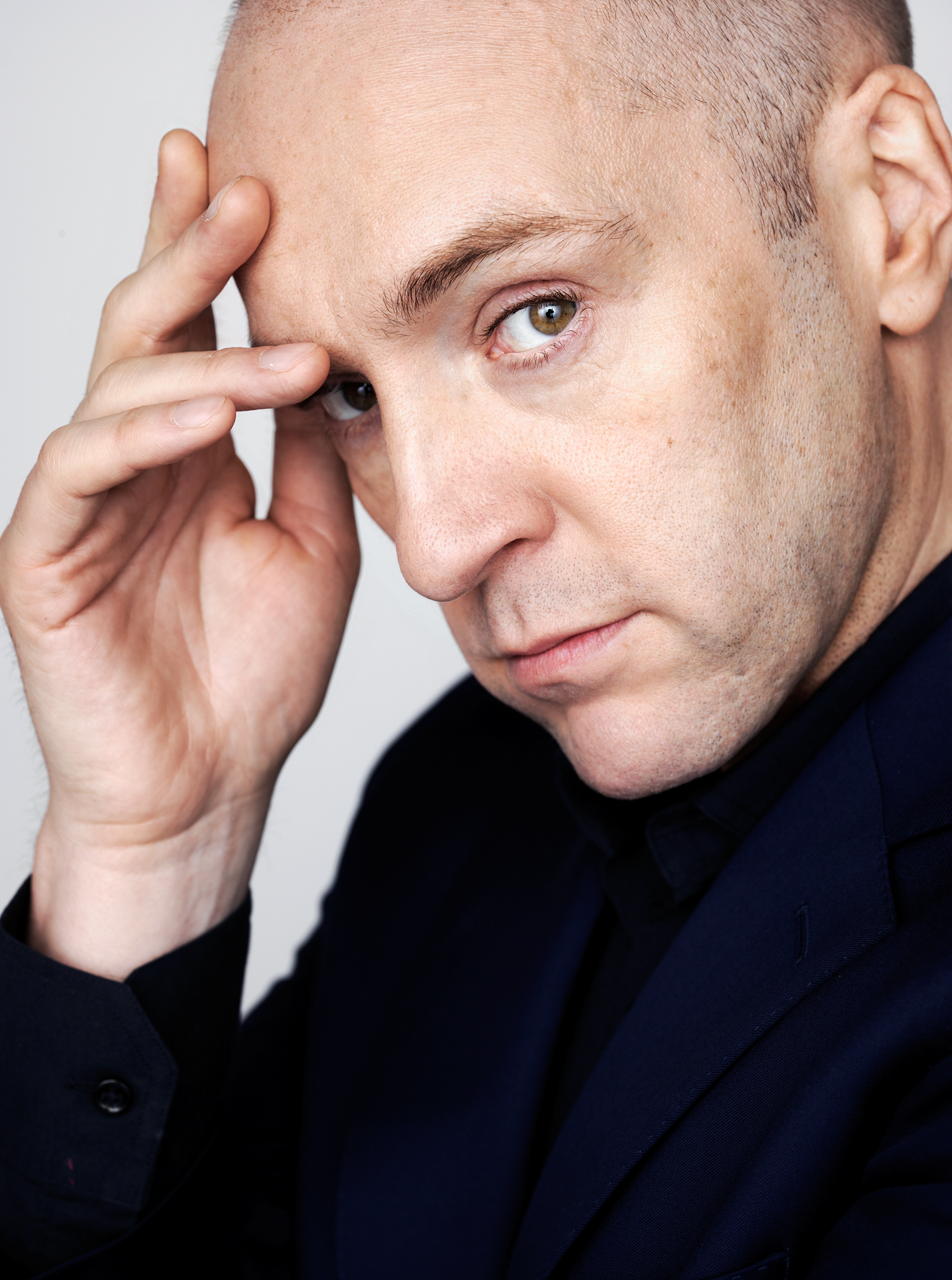
Derren Brown
Recent Episodes
How Einstein GPT Brings Generative AI to CRM
Episode 12 | 03.07.2023
Sellers as Trusted Advisors and More Tips to Maximize Efficiency
Episode 11 | 03.01.2023
Opening the Doors of Opportunity for Black Male Youth
Episode 10 | 02.22.2023
How Salesforce Research Is Using AI to Generate Proteins
Episode 9 | 02.15.2023
CNBC Reporter and Author Julia Boorstin on What Women Leaders Teach Us
Episode 5 | 02.03.2023
Can Bringing Back the Woolly Mammoth Help Save the Planet?
Episode 4 | 01.25.2023